
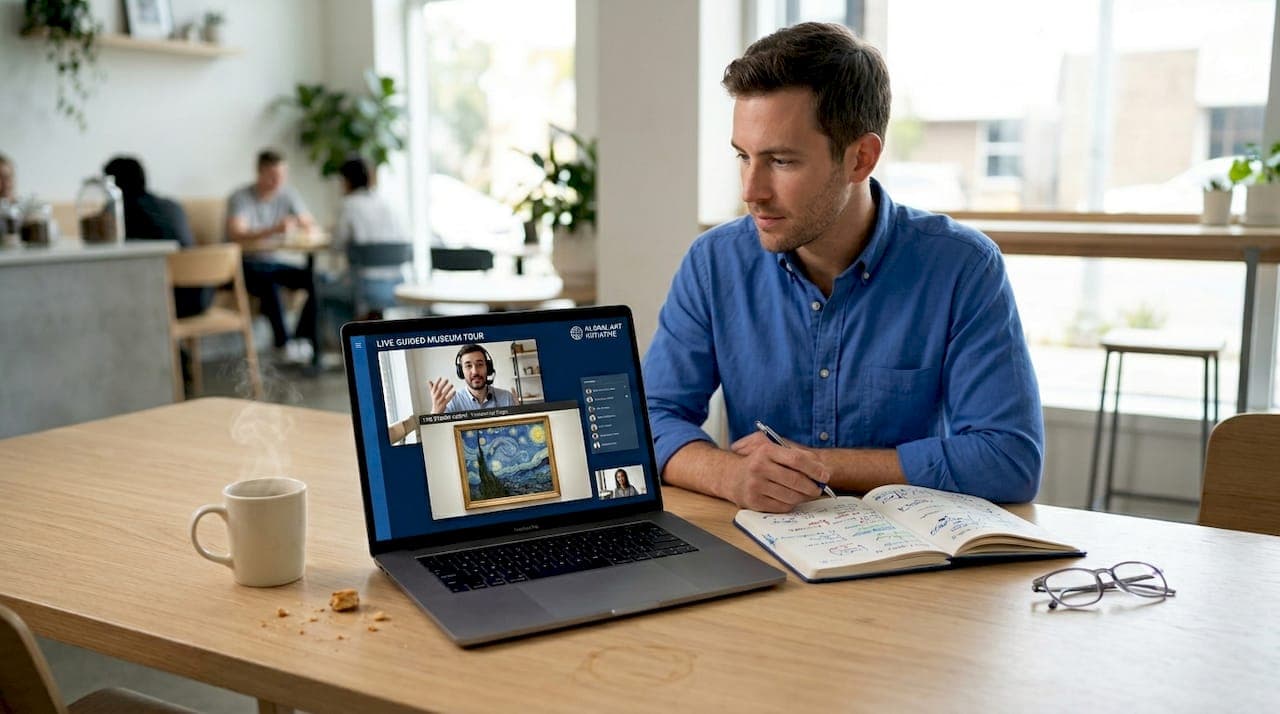
Most people still think of virtual tours as a slideshow you click through alone. That assumption misses what the technology has actually become. The role of live virtual guided tours is fundamentally different from passive, prerecorded experiences. These are real-time, bidirectional sessions where a guide leads participants through a space, answers questions on the spot, and shapes the experience based on what the audience actually wants to know. Education, tourism, and real estate have all discovered that this distinction matters enormously for engagement, trust, and outcomes.
Table of Contents
Key Takeaways
| Point | Details |
|---|---|
| Live tours are not passive | Real-time interaction separates live guided tours from prerecorded content, creating co-created experiences. |
| Narration increases presence | Narrated live experiences measurably increase spatial presence and emotional attachment to a place. |
| Interactivity drives trust | Authentic Q&A and guided decisions build telepresence and trust, directly influencing real estate and travel choices. |
| Gamification improves learning | Structured, gamified guidance in virtual educational settings produces better knowledge retention than unstructured tours. |
| Technology balance is critical | Reliable interaction backchannels are what keep a live tour from sliding into passive streaming. |
The role of live virtual guided tours, defined
The industry term for what most people call a “live virtual guided tour” is a live online guided tour, or sometimes a live-streamed guided experience. Understanding the distinction matters before you invest time building one.
A live online guided tour is a hybrid digital experience defined by bidirectional, real-time interaction. A human guide leads participants through a physical or virtual space while participants ask questions, respond to prompts, and influence the direction of the tour as it happens. This is categorically different from a prerecorded virtual tour, where the viewer clicks through a 360° environment alone, and different again from a passive livestream where a presenter broadcasts to a silent audience.
Here is how the three formats compare:
| Feature | Live guided tour | Prerecorded tour | Passive livestream |
|---|---|---|---|
| Real-time interaction | Yes | No | Limited |
| Guide responsiveness | Immediate | None | Delayed or none |
| Co-created experience | Yes | No | No |
| Viewer control | Shared with guide | Full | None |
| Emotional connection | High | Moderate | Low |
The technologies enabling live guided tours typically include:
-
360° cameras and spherical panorama software for immersive visual environments
-
Live video conferencing layers that carry the guide’s voice and face
-
Interactive hotspots and mini-maps embedded in the tour interface, which you can learn more about in this guide to 360° photos
-
Chat, polling, and Q&A tools that form the interaction backchannel
Without that backchannel, you do not have a live guided tour. You have a broadcast. The difference is everything.
Impact across education, tourism, and real estate
The benefits of virtual tours are well documented in general terms, but the specific gains from live guided formats are more striking and more sector-specific than most people realize.

Education
In educational settings, structure and feedback are what separate a useful virtual tour from a forgettable one. Research on virtual museum tours with elementary students found that gamified structured guidance significantly increased meaningful learning and satisfaction compared to unstructured exploration. The guide is not just narrating. The guide is scaffolding the cognitive experience, directing attention, and reinforcing learning objectives in real time.
That said, the same research notes an important nuance: structured guidance improves knowledge gain, but emotional engagement remains limited by the sensory constraints of the medium. Live guides can partially overcome this through authentic storytelling and responsive interaction, but it is worth setting realistic expectations for affective outcomes.
Tourism
For tourism, the stakes are different. A live tour of a destination is often a pre-purchase experience. Travelers use it to decide whether to book. Research drawing on a survey of 274 respondents found that interactivity and authenticity in live virtual tourism content increase telepresence and trust, which directly influence travel decisions. When a guide answers a specific question about a hotel’s proximity to public transit, that moment of authentic responsiveness does more for conversion than any polished promotional video.
AI-powered virtual anchors are also entering this space. Analysis of 291 survey datasets showed that AI virtual anchors in travel livestreams enhance telepresence through anthropomorphism and playfulness, indirectly encouraging travel intent. This is not a replacement for human guides, but it signals where the technology is heading.
Real estate
In real estate, interactive guided tours address one of the most persistent friction points in property buying: the gap between what a listing photo shows and what a space actually feels like. A live guide can walk a remote buyer through a property in real time, open doors on request, answer questions about natural light at different times of day, and respond to concerns about layout. That level of responsiveness builds buyer confidence in ways that static 360° tours simply cannot replicate.
Pro Tip: In real estate live tours, prepare a short list of common buyer objections before each session. Addressing them proactively during the tour, before the viewer has to ask, signals expertise and dramatically increases trust.
Interactive features and technology that drive engagement
Knowing that live interaction matters is one thing. Knowing how to design it is another. Here are the key elements that separate high-performing live guided tours from ones that lose their audience halfway through.
-
Real-time Q&A with a visible interaction queue. Participants need to see their questions acknowledged, even if the guide cannot answer every one immediately. A visible queue signals that the interaction is real, not performative.
-
Embedded hotspots and clickable points of interest. A systematic review of 360° tours found that narration and interactivity in virtual tours correlate with increased behavioral engagement and measurable outcome conversions. Hotspots give participants something to act on, not just watch.
-
Polls and live decision points. Asking participants to vote on where to go next or what to look at first creates a sense of co-ownership over the experience. This is one of the most underused tools in live tour design.
-
Gamification elements. Quizzes, discovery challenges, and point systems work particularly well in educational contexts. They shift the participant from observer to active learner.
-
AI-assisted guide support. AI tools can surface relevant facts, flag unanswered questions, or suggest content based on participant behavior, allowing human guides to focus on connection rather than recall.
The single biggest technical challenge is latency. Without a reliable interaction backchannel, engagement drops to passive consumption. A guide who cannot see or respond to participant input in real time is not running a live tour. They are running a webinar with better visuals.
Pro Tip: Test your interaction backchannel with a small internal group before any public session. Latency above two seconds in the Q&A feed is enough to break the feeling of real-time connection.
Live versus prerecorded tours: what the data shows
The experiential difference between live and prerecorded tours is not just qualitative. Research comparing narrated live experiences to passive tours found that narrative enhances spatial presence and place attachment, with live experiences producing stronger attachment than recorded ones.
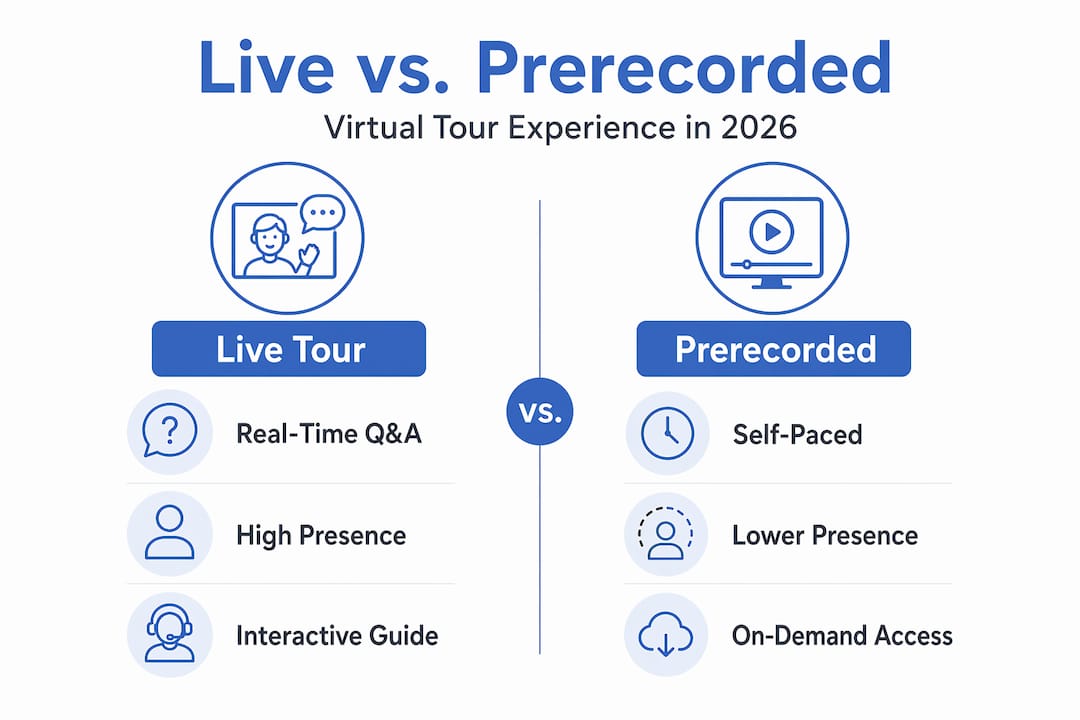
Here is how the two formats compare on key outcome metrics:
| Outcome metric | Live guided tour | Prerecorded tour |
|---|---|---|
| Spatial presence | High | Moderate |
| Place attachment | High | Low to moderate |
| Trust and authenticity | High | Low |
| Cognitive learning | High (with structure) | Moderate |
| Emotional engagement | Moderate to high | Low |
| Scalability | Limited | High |
| On-demand access | No | Yes |
The table reveals something important: prerecorded tours are not inferior across the board. They scale better and offer on-demand access, which matters for high-volume applications. The right choice depends on your goals. If you need to build trust, drive a decision, or create a memorable experience, live wins. If you need to serve thousands of users asynchronously, prerecorded has real advantages.
The future of virtual travel will likely combine both. A live tour creates the emotional anchor; a prerecorded version serves as the follow-up resource that reinforces what participants experienced.
Practical steps for implementing live guided tours
Whether you are in education, tourism, or real estate, the implementation path follows a similar logic. Here is what actually works.
-
Choose a platform built for live interactivity, not just streaming. The platform needs to support real-time Q&A, hotspot navigation, and guide controls simultaneously. Check out resources on starting a virtual tour business for platform guidance specific to commercial applications.
-
Script your narration structure, not your words. Guides who read from a script sound robotic. Guides who have a clear structural outline but speak naturally are far more engaging. Define your key stops, your key messages, and your planned interaction moments, then let the conversation breathe.
-
Prioritize connection speed and device compatibility. A technically brilliant tour that buffers on a participant’s laptop is a failed tour. Test across devices and connection speeds before going live.
-
Separate cognitive and emotional engagement metrics. Measuring success in virtual guided tours demands multiple engagement metrics, separating knowledge gain from emotional connection to get an honest picture of what is working.
-
Iterate based on session data. Track where participants disengage, which questions come up repeatedly, and which interaction points get the most response. Each session gives you data to improve the next one.
My perspective on what live interaction actually changes
I have reviewed a lot of virtual tour implementations across education, tourism, and real estate, and the pattern I keep seeing is this: organizations invest heavily in visual quality and almost nothing in interaction design. They build a beautiful 360° environment and then run it like a webinar. The guide talks. Participants watch. Nobody feels like they were actually there.
The research is clear that real-time interaction co-creates value in ways that visual fidelity alone cannot. But what the research does not fully capture is how quickly that value evaporates when the interaction feels performative. A guide who reads pre-submitted questions at the end of a session is not creating a live experience. They are creating the illusion of one.
What I have found actually works is treating the interaction backchannel as the primary product and the visuals as the delivery mechanism. When a real estate agent builds their live tour around the questions buyers are likely to ask, rather than around a scripted walkthrough, conversion rates go up. When a museum educator designs their virtual tour around decision points where students choose what to explore next, retention improves.
The honest challenge is that this requires more preparation, not less. Live tours feel spontaneous but perform best when they are carefully designed for responsiveness. That tension between structure and spontaneity is where most implementations fall short. The organizations that get it right are the ones that practice the interaction as much as they practice the narration.
— Andrea
Create your own live virtual tours with Simple Virtual Tour
If you are ready to move beyond passive presentations and build genuinely interactive experiences, Simple Virtual Tour gives you the tools to do it without a technical background.
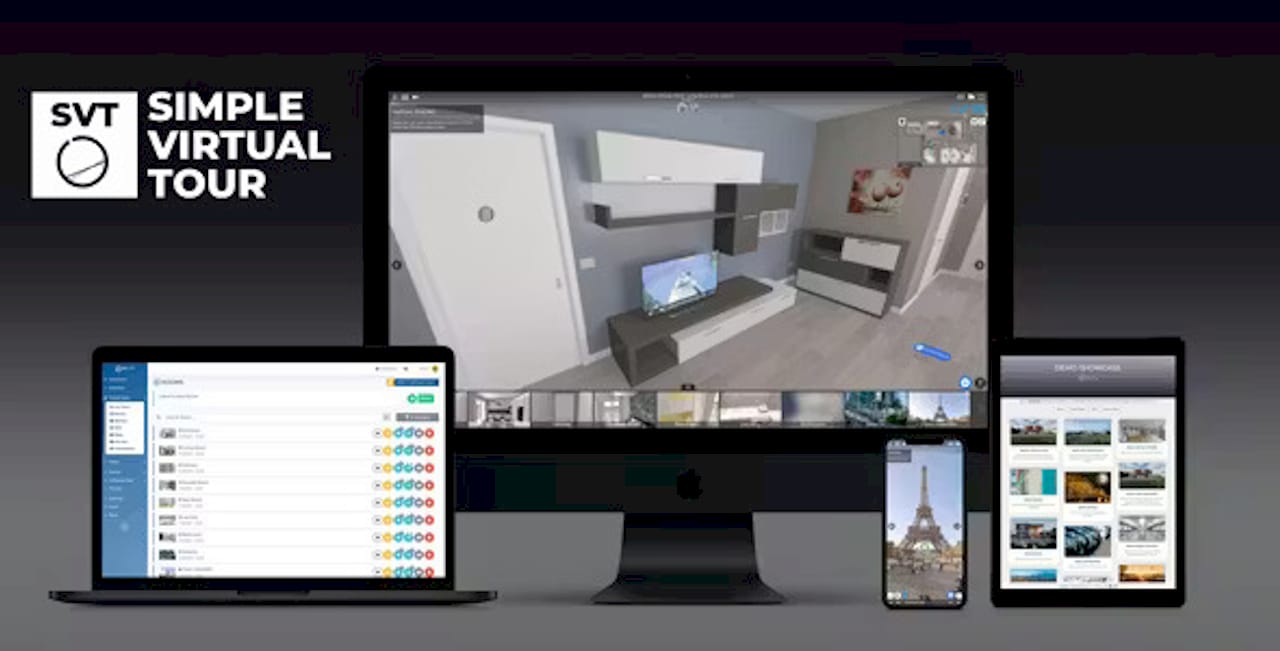
The platform supports live session capabilities, embedded hotspots, and e-commerce integration, covering the features that matter most for education, tourism, and real estate applications. With both cloud-hosted and self-hosted deployment options, you keep control of your data and your costs. Over 1,400 users already rely on it to create unlimited interactive virtual tours that engage clients and drive real decisions. The interface is intuitive enough for first-time users and flexible enough for professionals who want deep customization. Explore what is possible and see how quickly you can build something worth experiencing.
FAQ
What makes a live virtual guided tour different from a prerecorded one?
A live virtual guided tour features real-time, bidirectional interaction between a guide and participants, allowing questions, decisions, and responses to shape the experience as it happens. Prerecorded tours offer on-demand access but cannot adapt to individual participant needs.
How do live virtual tours work technically?
Live virtual tours typically combine 360° spherical panorama environments with a live video or audio feed from the guide, a chat or Q&A backchannel, and interactive elements like hotspots and polls embedded in the tour interface.
What are the main benefits of virtual tours in real estate?
In real estate, live guided tours allow remote buyers to explore properties interactively, ask specific questions in real time, and build trust with the agent, all of which increase buyer confidence and accelerate purchasing decisions.
Does narration really improve the virtual tour experience?
Yes. Research shows that narrated live experiences increase spatial presence and place attachment significantly more than tours without narration, making participants feel more connected to the space they are exploring.
What is the biggest technical risk in live virtual guided tours?
Latency in the interaction backchannel is the most common failure point. When guides cannot see or respond to participant input in real time, the experience drops to passive consumption, eliminating the core advantage of the live format.