
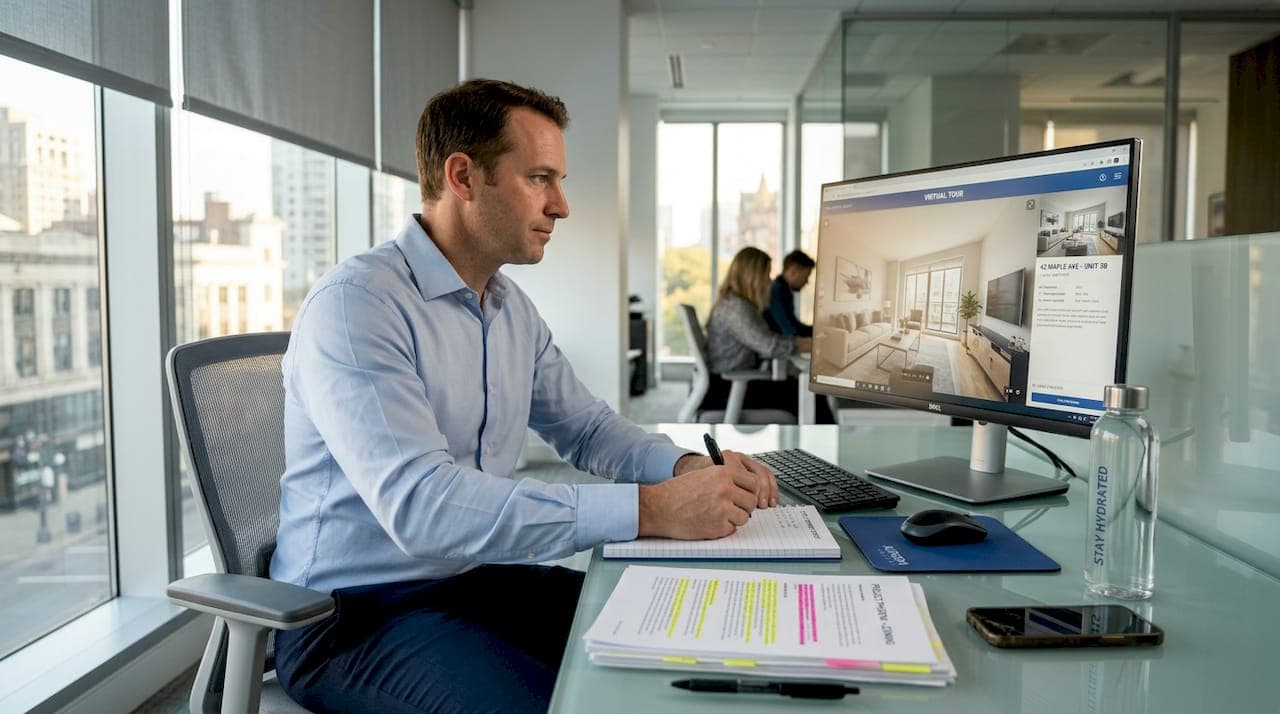
When a potential buyer, guest, or student can’t physically visit a space, their confidence depends entirely on what you show them and how you show it. Virtual tour customer trust building has become one of the most direct ways professionals in real estate, tourism, and education reduce hesitation and move people toward a decision. Listings with virtual tours attract 87% more views than those without, and the gap between a viewed listing and a closed deal often comes down to how much uncertainty the tour eliminates. This guide walks you through preparation, execution, and measurement so your virtual tours do more than look good. They build real confidence.
Table of Contents
Key Takeaways
| Point | Details |
|---|---|
| Transparency drives confidence | Structured, honest tours reduce customer uncertainty more effectively than polished visuals alone. |
| Narrative elements accelerate trust | Audio commentary and text hotspots clarify intent and context, shortening the decision cycle. |
| Governance cues matter | Embedding safety, accuracy, and policy signals inside your tour increases perceived credibility. |
| Follow-up is non-negotiable | Unanswered post-tour questions erode trust fast; consistent follow-up sustains the confidence you built. |
| Measure what matters | Track engagement time, lead conversions, and repeat visits to verify your trust-building impact. |
Virtual tour customer trust building: what you need before you start
Before you record a single frame, you need to understand what your specific audience considers trustworthy. In real estate, buyers want spatial accuracy and honest representation of condition. In tourism, guests want to verify that the property matches its description and photos. In education, prospective students and parents want to see governance, culture, and real learning environments, not a glossy brochure.
Choosing the right technology
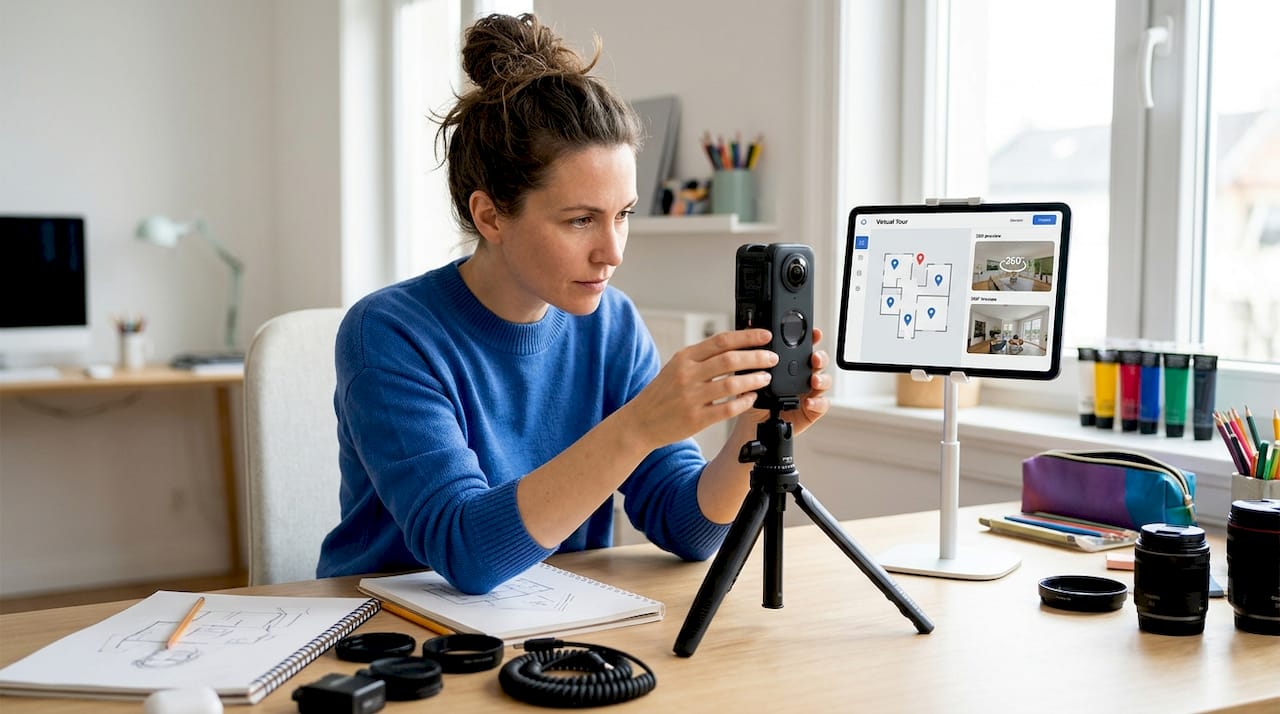
Your hardware choice directly affects how credible your tour feels. A 360-degree camera with at least 5.7K resolution produces the equirectangular images needed for smooth, professional spherical panoramas. For a starting point, the best 360 cameras for real estate and similar sectors range from consumer-friendly options under $500 to professional rigs above $2,000. The right choice depends on your volume of tours and the expectations of your audience.
Here is a quick comparison of platform options to consider when selecting your virtual tour software:
| Feature | Entry-level platforms | Mid-tier platforms | Full-featured platforms |
|---|---|---|---|
| Ease of use | High | Moderate | Moderate to high |
| Analytics and lead capture | Limited | Basic | Full |
| Self-hosted option | No | Rarely | Yes (e.g., Simple Virtual Tour) |
| Custom branding | Limited | Partial | Full |
| Live session capability | No | No | Yes |
Planning for credibility from the start
Set measurable goals before you begin. Ask yourself: what specific questions does this tour need to answer? What would make a viewer feel confident enough to take the next step? Proactive transparency builds trust most effectively when the information is framed as unbiased and complete, not selective. That means including less flattering angles alongside the best ones, noting accurate dimensions, and being upfront about what the space is and is not.
Pro Tip: Write down the top five questions your clients typically ask before committing. Then verify that your tour answers every single one of them before publishing.
Step-by-step execution for tours that build confidence
Creating a tour that genuinely builds customer confidence online requires more than good photography. It requires deliberate structure and honest storytelling.
-
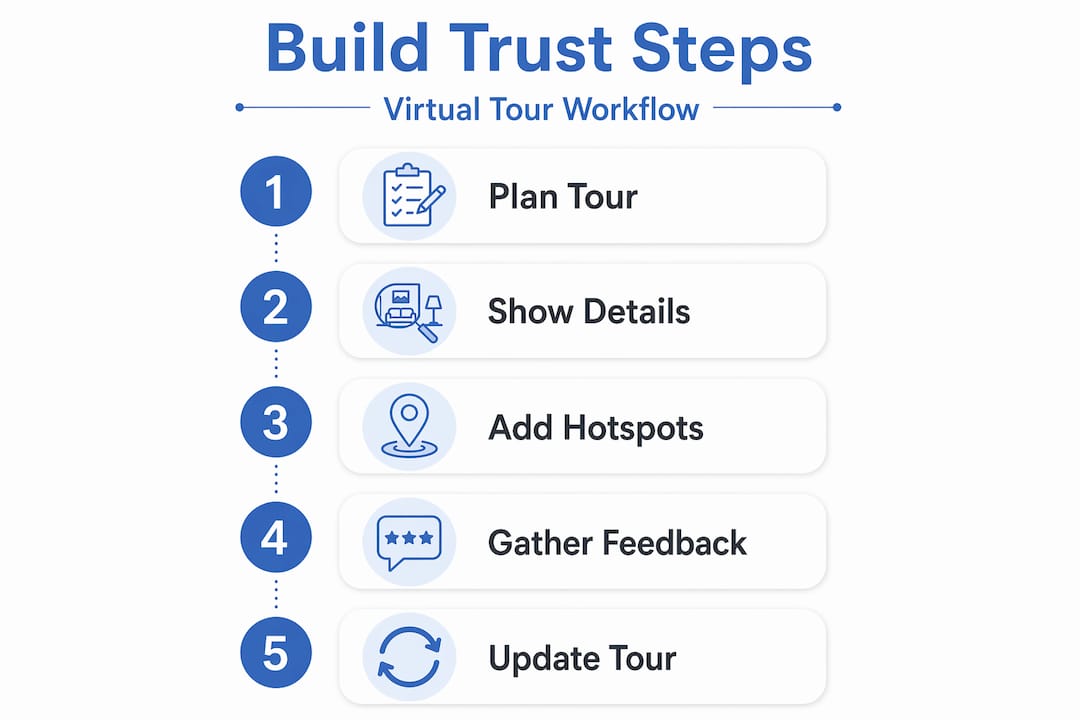
Capture with accuracy, not just aesthetics. Shoot every room or area, including storage spaces, utility areas, and transitional hallways. Skipping these creates gaps that viewers notice and distrust.
-
Structure the tour to guide interpretation. Start with an orientation view that gives spatial context, then move logically through the space. Structured interpretation guides that call out key spatial flows reduce what researchers call “trust loss at the interpretation layer,” where viewers fill in missing information with assumptions.
-
Add audio narration or text hotspots. Video narration clarifies intent and tone in ways that static images cannot. A short audio note explaining why a room is configured a certain way, or a text hotspot disclosing the age of a roof, tells viewers you have nothing to hide.
-
Embed governance and safety cues. For regulated environments like schools or rental properties, trust in virtual environments increases significantly when governance signals are visible. Include licensing information, safety certifications, or accreditation badges directly inside the tour interface.
-
Integrate lead capture at the right moment. Place a contact form or call to action after the viewer has explored the core spaces, not at the opening screen. Timing matters. A viewer who has just seen the full property is far more ready to engage than one who has seen nothing yet.
-
Distribute strategically. Embed the tour on your website, share it in email campaigns, and post it on platforms where your audience already spends time. For education professionals, embedding tours on admissions pages alongside policy and governance information is especially effective.
Here are the most common distribution mistakes to avoid:
-
Sharing only a link without context or a brief written introduction
-
Publishing a tour before testing it on both desktop and mobile
-
Failing to update the tour after physical changes to the space
-
Omitting contact information or next steps from the tour interface
Pro Tip: Customers expect updated visuals that accurately reflect current conditions, especially in tourism and hospitality. Set a calendar reminder to review and refresh your tour every six months.
Common challenges and how to address them
Even a well-produced tour can undermine trust if certain pitfalls go unaddressed.
-
Outdated representations. A tour showing a renovated kitchen that no longer exists, or a hotel pool that is closed for repairs, destroys credibility instantly. Accuracy is not optional.
-
Unanswered viewer questions. Unanswered post-tour questions erode trust fast. Build a response protocol into your workflow so that every inquiry submitted through the tour receives a reply within 24 hours.
-
Technical friction. Slow loading times, broken hotspots, or poor mobile performance signal unprofessionalism. Test your tour on at least three different devices before publishing.
-
Lack of context for unfamiliar viewers. A prospective student touring a campus for the first time needs more than pretty images. Virtual school tours strengthen institutional accountability by pairing visuals with clear contextual information about policies and governance.
“Trust builds fastest when customers clearly see what happens before, during, and after, so they are not exposed to unknowns.” — Entrepreneur.com, 2026
The corrective pattern here is consistent. Every challenge above comes back to the same principle: show more, explain more, and respond faster. Professionals who treat their virtual tour as a living document rather than a one-time asset maintain trust over time. Those who publish and forget see engagement drop and credibility suffer.
Pro Tip: Create a short FAQ document that lives alongside your virtual tour. Link to it from a hotspot inside the tour itself so viewers can resolve questions without leaving the experience.
Measuring the impact on trust and engagement
Knowing that your tour looks good is not the same as knowing it builds trust. You need data.
Key metrics to track
The most useful indicators of virtual tour impact on sales and trust are:
-
Average session duration. Longer time spent inside the tour correlates with higher engagement and reduced hesitation.
-
Hotspot interaction rate. Which information points are viewers clicking? Low interaction on key disclosure hotspots may mean they are placed incorrectly.
-
Lead conversion rate. Track what percentage of tour viewers submit a contact form or take a defined next step.
-
Repeat visit rate. A viewer who returns to the tour multiple times is seriously considering a commitment. This is one of the strongest trust signals you can measure.
Collecting qualitative feedback
Numbers tell you what is happening. Qualitative feedback tells you why. After a prospect completes a tour, send a short two or three question survey asking what the tour clarified, what questions it left unanswered, and how confident they feel about taking the next step. The answers will directly inform your next revision.
Integrating analytics and lead capture into your virtual tour workflow transforms it from a passive asset into a measurable conversion stage. Treat each tour revision as a test. Change one element at a time, whether that is hotspot placement, narration length, or call-to-action timing, and measure the effect before changing another.
My take on what actually moves the needle
I’ve worked with professionals across real estate, tourism, and education who invest in high-quality virtual tours and then wonder why their conversion rates stay flat. In my experience, the production quality is rarely the problem. The problem is almost always structure and follow-through.
What I’ve seen work consistently is treating the tour as a conversation, not a presentation. The tours that build the deepest confidence are the ones that anticipate objections and address them proactively inside the experience itself. A real estate agent who includes a hotspot explaining a water stain that was already repaired builds more trust than one who shows a flawless tour that raises no questions at all.
I’ve also learned that the follow-up matters as much as the tour itself. Consistent, transparent follow-up after initial contact is what separates professionals who close deals from those who generate interest and lose it. One well-timed message that references something specific the viewer saw in the tour, and asks if they have questions, does more for trust than any amount of production polish.
The other thing I’d push back on is the idea that virtual tours are primarily a marketing tool. They are a trust tool. The moment you start designing them to impress rather than to inform, you lose the thing that makes them genuinely effective. Transparency, accuracy, and honest narrative are not just nice-to-haves. They are the mechanism by which 76% of buyers feel confident enough to skip an in-person showing entirely.
— Andrea
Build better tours with Simple Virtual Tour
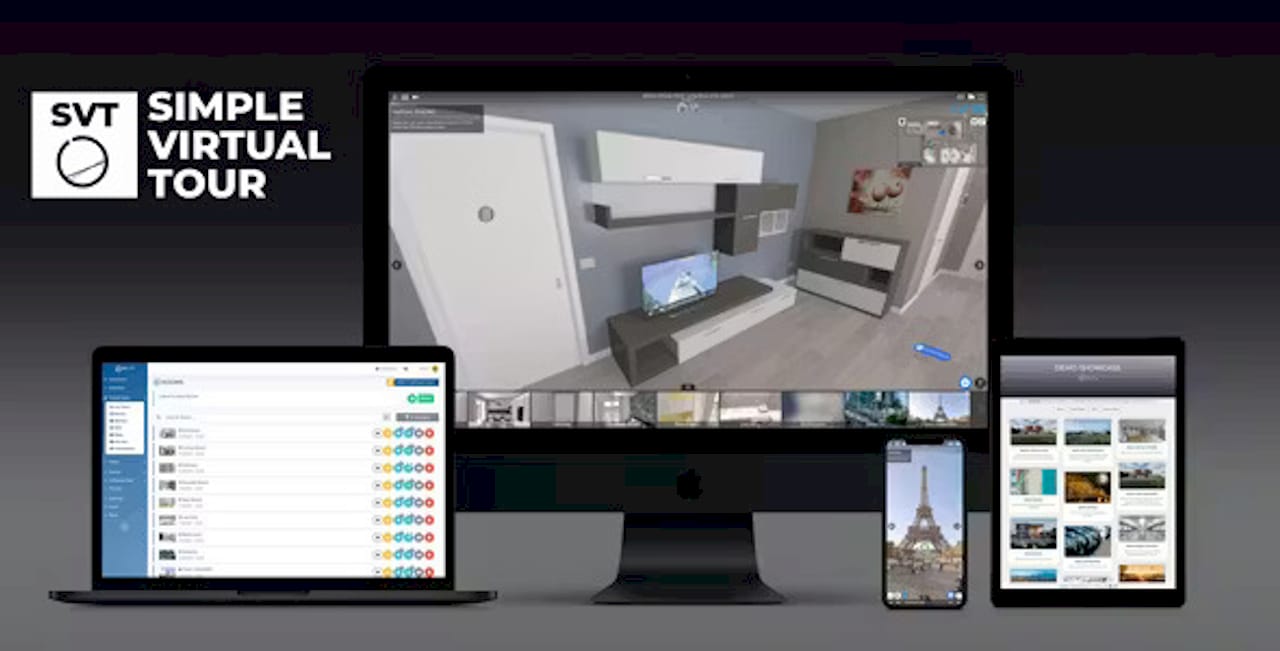
If you are ready to put these trust-building techniques for businesses into practice, Simple Virtual Tour gives you the tools to do it without a steep learning curve. The platform lets you create unlimited interactive tours with built-in lead capture, analytics, and live session capabilities, all from an intuitive backend that requires no technical expertise. You can choose between cloud-hosted and self-hosted deployment, giving you full control over your data and your client experience. Whether you are showcasing a property, a resort, or a university campus, Simple Virtual Tour helps you present spaces with the transparency and professionalism that converts viewers into committed clients. Explore the self-hosted vs cloud options to find the plan that fits your workflow and budget.
FAQ
How do virtual tours increase customer trust?
Virtual tours increase trust by giving customers a transparent, self-directed view of a space before committing. They reduce uncertainty by answering questions visually that text and photos cannot address.
What trust signals should I include in a virtual tour?
Include governance cues like certifications or accreditations, accurate disclosures via text hotspots, and up-to-date visuals that reflect current conditions. These signals tell viewers the experience is honest and complete.
How often should I update my virtual tour?
Update your tour whenever the physical space changes and review it at least every six months. Outdated representations are one of the fastest ways to lose credibility with prospective clients.
Can virtual tours replace in-person visits for decision-making?
For many buyers, yes. Research shows 76% of buyers would skip an in-person showing if the virtual tour fully answered their questions, which means tour quality directly determines whether a visit is even necessary.
What metrics show that a virtual tour is building trust?
Track session duration, hotspot interaction rates, lead conversion rates, and repeat visit rates. A combination of long sessions and high repeat visits is a strong indicator that the tour is building genuine confidence.