

What makes digital tourism experiences work?
Digital tourism experiences are interactive, technology-driven platforms that help visitors discover and engage with physical locations through immersive virtual tools. At their core, they combine three essential components: a multilingual content management system (CMS) for organizing and delivering information, geospatial interactive maps with points of interest (POIs), and thematic itineraries that guide visitors through curated narratives.
Understanding how digital tourism experiences work starts with recognizing that these platforms are not simply digital brochures. They integrate content, interactivity, and user-centered design to create journeys that feel personal and responsive, whether a visitor is exploring from home or standing in front of a landmark.
Key components include:
- Multilingual CMS: Manages and publishes content across languages, keeping information consistent across websites, kiosks, and mobile apps simultaneously.
- Geospatial interactive maps: Display thousands of POIs with dynamic filtering, routing, and server-side clustering to maintain performance at scale.
- Thematic itineraries: Organize POIs into narrative trails that reflect cultural, historical, or experiential themes.
- Progressive Web Apps (PWAs): Deliver fast, near-native mobile access without requiring app store downloads, including offline functionality.
- User-centered design: Structures every interaction around visitor needs, from intuitive navigation to accessible content formats.
Table of Contents
- Which technologies power interactive digital tourism platforms?
- What benefits do digital tourism experiences deliver?
- Why privacy and security cannot be an afterthought
- How phygital tourism blends the physical and digital worlds
- What Simple Virtual Tour offers for digital tourism
- How to build and launch a digital tourism experience step by step
- Real-world examples of digital tourism done well
- What challenges should you plan for?
- How to measure whether your digital tourism experience is working
- What does a digital tourism project actually cost?
- Simple Virtual Tour gives you a practical starting point
- Key Takeaways
Which technologies power interactive digital tourism platforms?
The technical foundation of a digital tourism platform determines how well it performs under real-world conditions. Server-side geospatial clustering using tools like PostGIS is critical when managing numerous POIs. Without it, map rendering slows to a crawl and visitor engagement drops immediately.
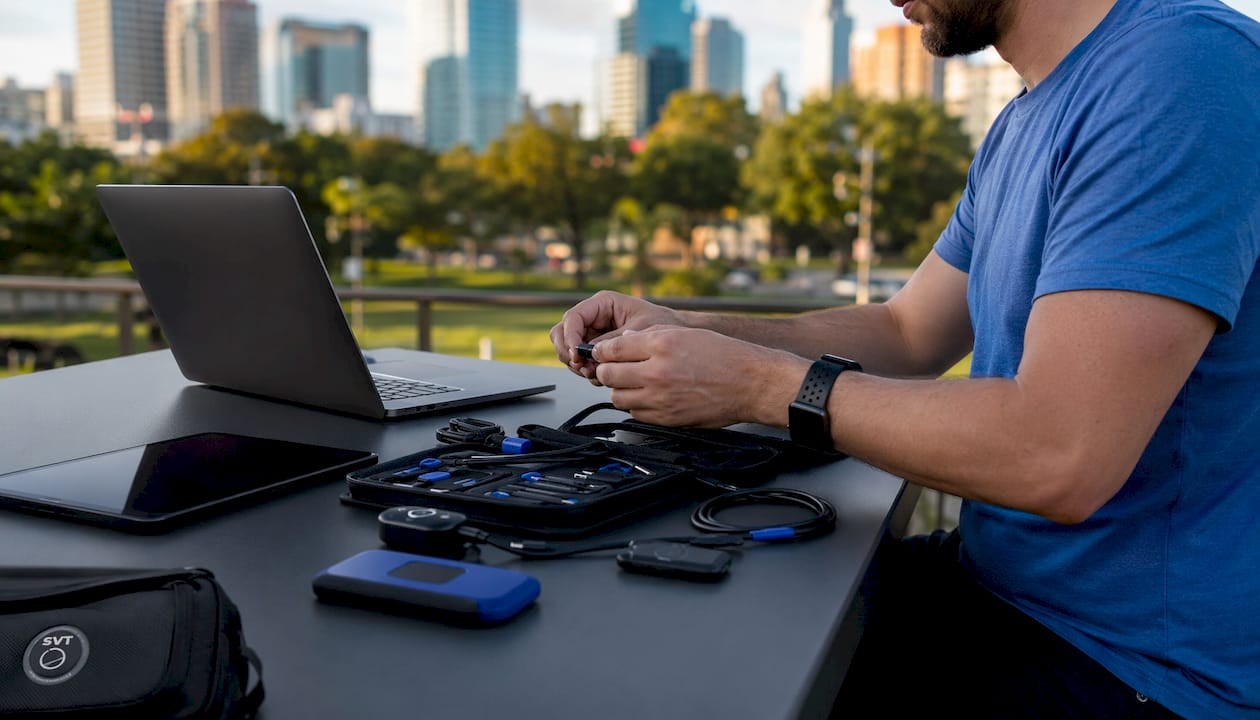
PWAs are the preferred delivery method for most platforms. They combine offline usability, fast load times, and broad device compatibility, all without the friction of an app store download. Practitioners consistently find that PWAs outperform high-end VR setups in real-world adoption because accessibility matters more than spectacle for most visitors.
Open-source tools like Wagtail CMS, Leaflet for interactive mapping, and Tailwind CSS for front-end styling give development teams flexibility and long-term adaptability. A multilingual CMS built on this kind of architecture feeds content simultaneously to mobile apps, interactive kiosks, and websites, reducing manual workload and preventing inconsistencies across visitor touchpoints.
Storytelling elements, such as audio guides, photo galleries, and narrative trail structures, layer meaning onto raw geographic data. The result is a platform that feels curated rather than cataloged.
What benefits do digital tourism experiences deliver?
The impact of technology on tourism goes well beyond convenience. The UN Tourism organization highlights that digital tools help destinations manage seasonality, disperse visitor flows, and improve sustainability by continuously measuring and analyzing data. That is a structural shift, not just a feature upgrade.
For visitors, the benefits are immediate. Interactive maps surface lesser-known POIs, pulling foot traffic away from overcrowded hotspots. Personalized itineraries match visitor interests to available experiences. Multilingual content removes language barriers that often reduce engagement at heritage sites.
Pro Tip: Digital trails that highlight off-the-beaten-path locations do double duty: they improve visitor satisfaction and reduce wear on high-traffic sites, supporting long-term sustainability goals.
For destination managers and businesses, the advantages include:
- Real-time content updates across all visitor touchpoints from a single CMS.
- Data-driven insights into visitor behavior, dwell time, and popular routes.
- Enhanced marketing reach through shareable digital content and virtual tour experiences that attract interest before the trip.
- Reduced operational costs through automated information delivery replacing printed materials.
Research confirms that smart technology positively affects the tourism experience, with informativeness and interactivity identified as the most influential attributes driving visitor satisfaction.
Why privacy and security cannot be an afterthought
Security concerns directly undermine the visitor experience. The same meta-analysis on smart technology in tourism found a clear negative relationship between privacy concerns and overall tourism experience quality. Visitors who feel uncertain about how their data is used engage less and trust less.
Best practices for securing digital tourism platforms include:
- Secure backend infrastructure: Encrypted data storage and transmission protocols protect behavioral and location data.
- Opt-in data collection: Visitors should explicitly consent before any personalization data is gathered.
- Compliance with data protection standards: U.S. platforms should align with applicable state privacy laws, and those serving international visitors should account for GDPR requirements.
- Transparent privacy policies: Plain-language explanations of what data is collected and why build visitor confidence.
- Regular security audits: Scheduled penetration testing and vulnerability assessments catch issues before they affect users.
Treating security as a foundational design pillar, rather than a post-launch patch, is what separates platforms that earn long-term visitor trust from those that lose it after a single incident.
How phygital tourism blends the physical and digital worlds
Phygital tourism is the third domain of visitor experience, sitting between purely physical travel and fully virtual exploration. Recent research defines it as the fusion of the emotional value of physical presence with the functional customization of digital technology. You are standing in a real place, but digital layers are actively enriching what you see, hear, and understand.
Practical phygital elements include:
- Augmented reality overlays: Point a smartphone at a building facade and see its 1890s appearance reconstructed in real time.
- Gesture recognition interfaces: Touchless interactive kiosks that respond to hand movements, useful in high-traffic or accessibility-sensitive environments.
- Smart audio guides: Context-aware narration that triggers based on GPS location rather than requiring manual selection.
- Digital screens at visitor sites: Interactive displays that surface real-time information, wayfinding, and multimedia content at the point of physical engagement.
The phygital approach creates more memorable journeys because it respects what physical presence offers while adding layers that physical reality alone cannot provide. Visitors leave with richer context and a stronger connection to the destination.
What Simple Virtual Tour offers for digital tourism
Simple Virtual Tour is purpose-built software for creating interactive virtual tours that showcase physical locations. It serves over 1,400 users across real estate, tourism, and related sectors, with a feature set designed to be accessible to non-technical users while remaining powerful enough for professional deployments.
Key platform capabilities:
- Dual deployment model: Choose between cloud-hosted for fast setup or self-hosted for full data control and reduced ongoing costs.
- Live session capabilities: Host real-time guided tours with virtual visitors, adding a human layer to the digital experience.
- E-commerce integration: Accept bookings and process sales directly within the virtual tour environment.
- Intuitive backend: Create and manage content without developer support, keeping your team independent.
- Unlimited tour creation: No per-tour caps, supporting destinations with large and growing POI libraries.
| Feature | Benefit | Typical Use Case |
|---|---|---|
| Cloud or self-hosted deployment | Data control and cost flexibility | Tourism boards, real estate agencies |
| Live session capabilities | Real-time visitor interaction | Guided virtual property or site tours |
| E-commerce integration | In-tour bookings and sales | Hospitality, attractions, retail |
| Intuitive backend | Non-technical content management | Small destination teams, solo operators |
| Unlimited tour creation | Scalable for large POI libraries | Regional tourism platforms |
How to build and launch a digital tourism experience step by step
Creating a digital tourism experience follows a clear sequence, and skipping steps early creates expensive problems later.
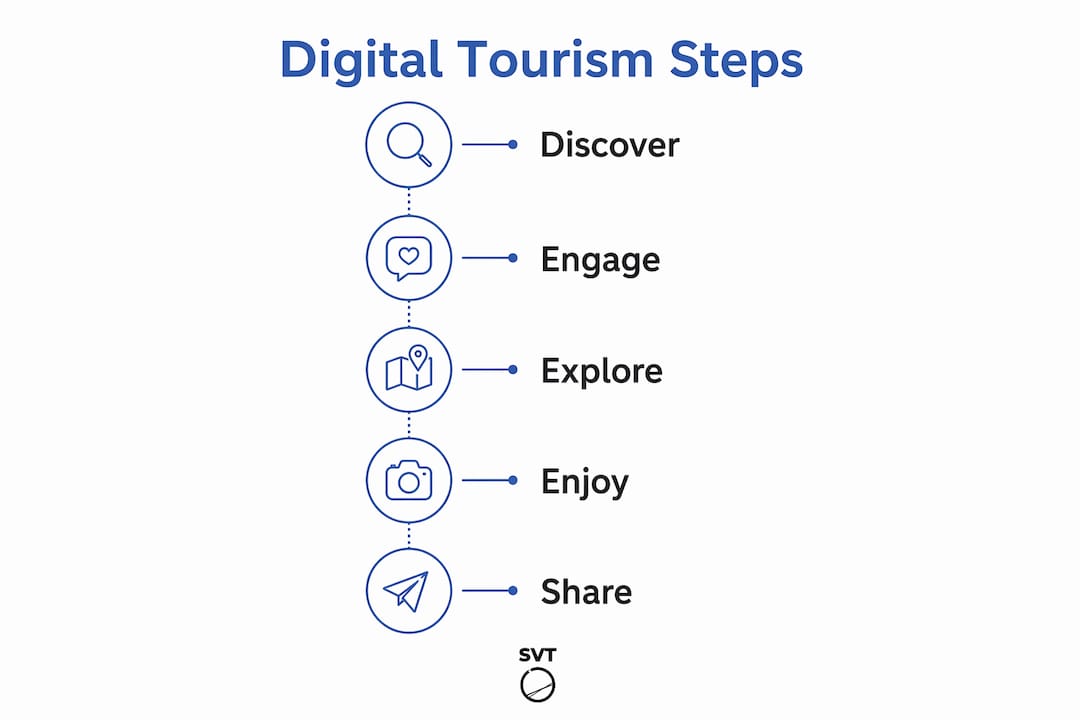
- Define your visitor personas and goals. Who is your audience, and what do you want them to do? A heritage trail for history enthusiasts needs different content depth than a quick-visit map for day-trippers.
- Audit your existing content and POI data. Inventory what you already have: photos, descriptions, GPS coordinates, audio assets. Gaps identified now are easier to fill before development begins.
- Choose your platform and deployment model. Evaluate whether cloud-hosted or self-hosted fits your team's technical capacity and data governance requirements.
- Build your geospatial data layer. Input and categorize POIs, assign themes, and configure clustering to maintain map performance.
- Create and localize content. Write descriptions, record audio, and translate content through your CMS for each target language.
- Design thematic itineraries. Group POIs into narrative trails that give visitors a reason to follow a path rather than browse randomly.
- Test on real devices. Check performance on low-end smartphones, in low-connectivity environments, and with users unfamiliar with the platform.
- Launch and promote. Distribute your PWA link through tourism board channels, social media, and on-site signage. No app store submission required.
- Monitor and iterate. Use engagement metrics to identify which itineraries perform well and which POIs visitors skip.
Real-world examples of digital tourism done well
Several destinations have demonstrated what well-executed digital tourism looks like in practice.
National park virtual access: Parks like Hawaii Volcanoes National Park have deployed 360-degree virtual tours with ranger-guided narration, allowing visitors to experience lava tubes and rainforest canopies remotely. The interactive hotspot model, where visitors click to trigger video or contextual information, has proven effective for pre-trip planning and post-visit reinforcement.
Heritage site AR integration: Cultural institutions using augmented reality overlays have enabled visitors to see historical reconstructions layered over current physical conditions. This approach works particularly well at archaeological sites where the visible remains require significant interpretation.
Tourism board virtual experience programs: Regional tourism boards have adopted virtual tour platforms to attract visitors during off-peak seasons, using immersive content to generate interest before the physical trip. The data collected from virtual visitor behavior also informs which physical experiences to promote more heavily.
Networked display systems: Tourism districts have deployed shared digital display networks across multiple sites, creating a connected information layer that guides visitors between locations and surfaces real-time event information.
What challenges should you plan for?
Digital tourism deployments face predictable obstacles. Knowing them in advance lets you budget and plan accordingly.
Connectivity gaps: Rural and heritage sites often have poor cellular coverage. PWAs with offline caching address this, but content must be pre-loaded thoughtfully.
Content maintenance burden: A platform with hundreds of POIs requires ongoing editorial attention. Outdated information erodes visitor trust faster than a slow-loading map.
Accessibility requirements: Audio descriptions, high-contrast interfaces, and keyboard navigation are legal requirements in many U.S. contexts under the Americans with Disabilities Act, not optional enhancements.
Stakeholder alignment: Multi-site tourism platforms often involve multiple organizations with different content priorities. A clear governance model for the CMS prevents conflicting updates.
Technical skill gaps: Self-hosted deployments require server management capability. Cloud-hosted options reduce this barrier significantly for smaller teams.
How to measure whether your digital tourism experience is working
Effective measurement combines quantitative platform data with qualitative visitor feedback.
Key metrics to track:
- Session duration and pages per session: Longer sessions and deeper navigation indicate genuine engagement.
- Itinerary completion rates: What percentage of visitors follow a trail to its end? Low completion points to content or UX friction.
- POI interaction rates: Which points of interest attract the most clicks, audio plays, or photo views?
- Return visit rate: Visitors who return to the platform are candidates for loyalty programs and repeat physical visits.
- Conversion rate: For platforms with booking or e-commerce integration, track how many virtual visitors take a commercial action.
Pair these with periodic visitor surveys asking about content quality, navigation ease, and whether the digital experience influenced their decision to visit physically. That connection between virtual engagement and physical footfall is the metric destination managers care about most.
What does a digital tourism project actually cost?
Budgeting for digital tourism varies widely based on scope, deployment model, and content volume. The main cost categories are platform licensing, content production, and ongoing maintenance.
Platform licensing: Software-as-a-service platforms charge monthly or annual fees based on features and user volume. Self-hosted solutions like Simple Virtual Tour reduce recurring costs but require server infrastructure investment upfront.
Content production: Photography, 360-degree capture, copywriting, translation, and audio recording are typically the largest line items. A destination with 50 POIs in three languages needs a realistic content budget before any development begins.
Integration and customization: Connecting a virtual tour platform to an existing booking system or CMS adds development cost. Platforms with native e-commerce integration reduce this.
Maintenance: Plan for quarterly content reviews, annual security audits, and periodic platform updates. Underfunding maintenance is the most common reason digital tourism platforms degrade over time.
For smaller destinations and businesses, starting with a focused set of high-quality POIs and expanding iteratively is more effective than launching a large platform with thin content.
Simple Virtual Tour gives you a practical starting point
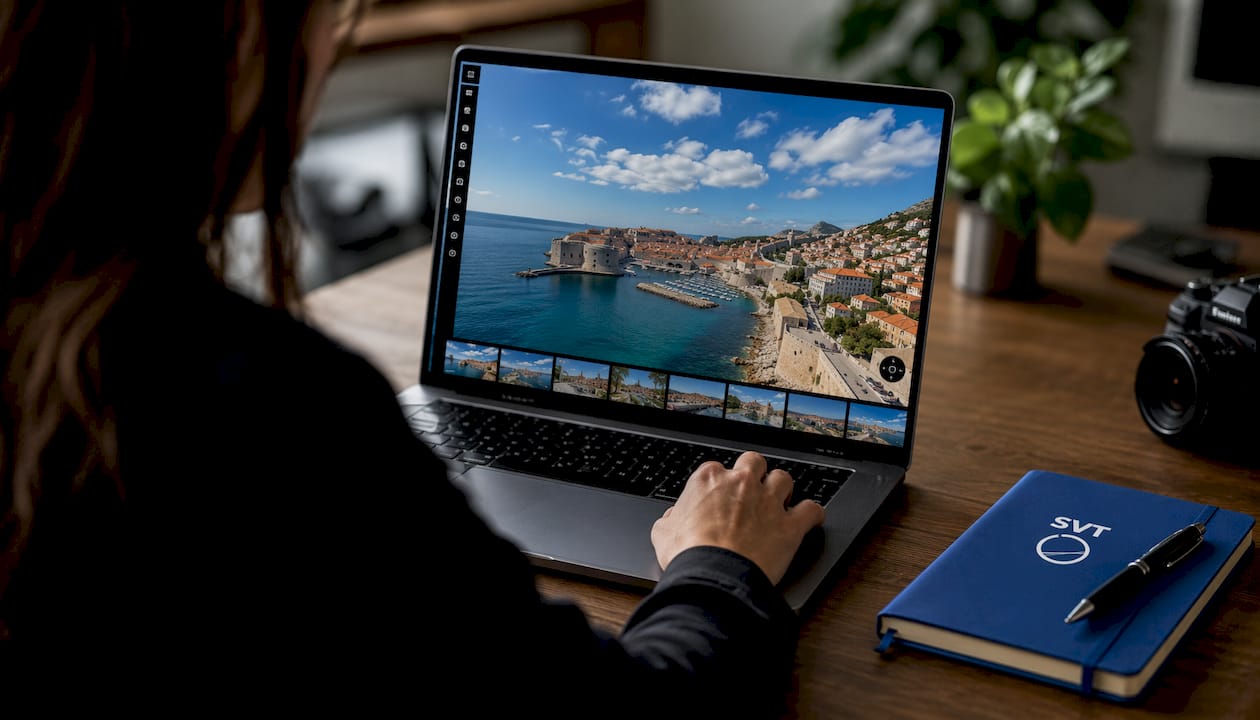
Simple Virtual Tour is built for exactly the situation most tourism businesses and destination teams face: you need a professional, interactive virtual tour without a long development timeline or a large technical team. The dual deployment model means you can start on the cloud and migrate to self-hosted when you are ready to take full control of your data and reduce ongoing costs.
With live session capabilities, e-commerce integration, and an intuitive backend that non-technical staff can manage independently, Simple Virtual Tour covers the full workflow from content creation to visitor engagement. Over 1,400 users are already using it to showcase physical locations across tourism, real estate, and hospitality. Getting started is straightforward: visit the platform, choose your deployment model, and begin building your first tour.
Key Takeaways
Digital tourism experiences work by combining geospatial mapping, multilingual content management, and Progressive Web App delivery to create interactive, immersive visitor journeys that serve both physical and remote audiences.
| Point | Details |
|---|---|
| Core technology stack | PWAs, multilingual CMS, and server-side geospatial clustering are the three non-negotiable foundations. |
| Sustainability impact | Digital tools help destinations disperse visitor flows and reduce overcrowding at high-traffic sites. |
| Security is foundational | Privacy concerns measurably reduce visitor satisfaction; secure-by-design platforms outperform retrofitted ones. |
| Phygital integration | Blending AR, smart audio, and digital screens with physical presence creates more memorable visitor experiences. |
| Simple Virtual Tour | Offers cloud and self-hosted deployment, live sessions, and e-commerce integration for tourism and real estate teams. |