
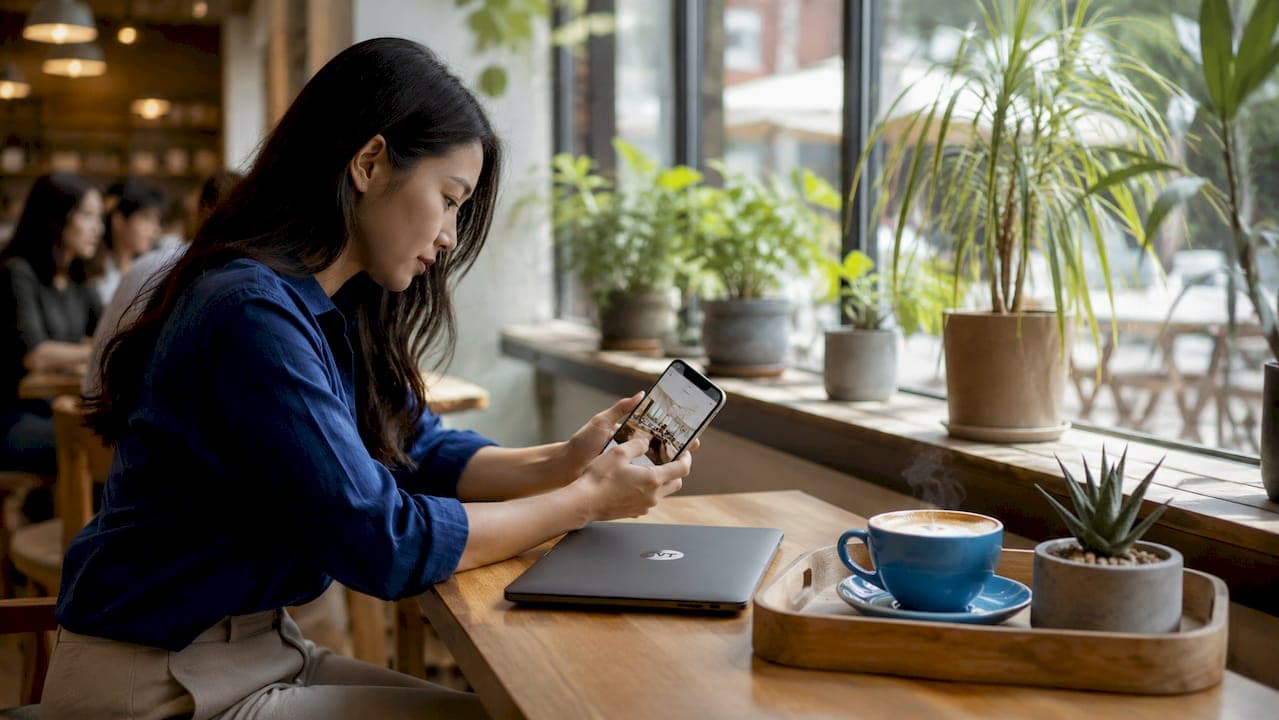
Mobile-friendly real estate tours are immersive virtual property presentations optimized for smartphones and tablets, and they have become the defining factor in whether a buyer engages with a listing or scrolls past it. The role of mobile-friendly real estate tours goes far beyond convenience. As of 2026, over 54% of buyers refuse to consider listings without virtual tours, and 75% prefer virtual tours over static photos. That shift in buyer behavior has made mobile optimization not a nice-to-have feature, but a core requirement for competitive property marketing. Buyers aged 18–34 are 130% more likely to book a showing after an immersive tour. That figure alone tells you where buyer attention lives.
What benefits do mobile-friendly real estate tours provide?
Mobile-optimized virtual tours deliver measurable advantages for both buyers and sellers. The benefits of virtual property tours extend across the entire transaction cycle, from first click to final offer.
For buyers, the core benefit is convenience. You can walk through a three-bedroom home on your lunch break, revisit the kitchen layout at midnight, or share the tour link with a partner across the country. That flexibility removes friction from the decision process and builds confidence before a physical showing ever happens. 3D tours foster emotional clarity by letting buyers experience space rather than just view it. Emotional clarity translates directly into stronger purchase intent.
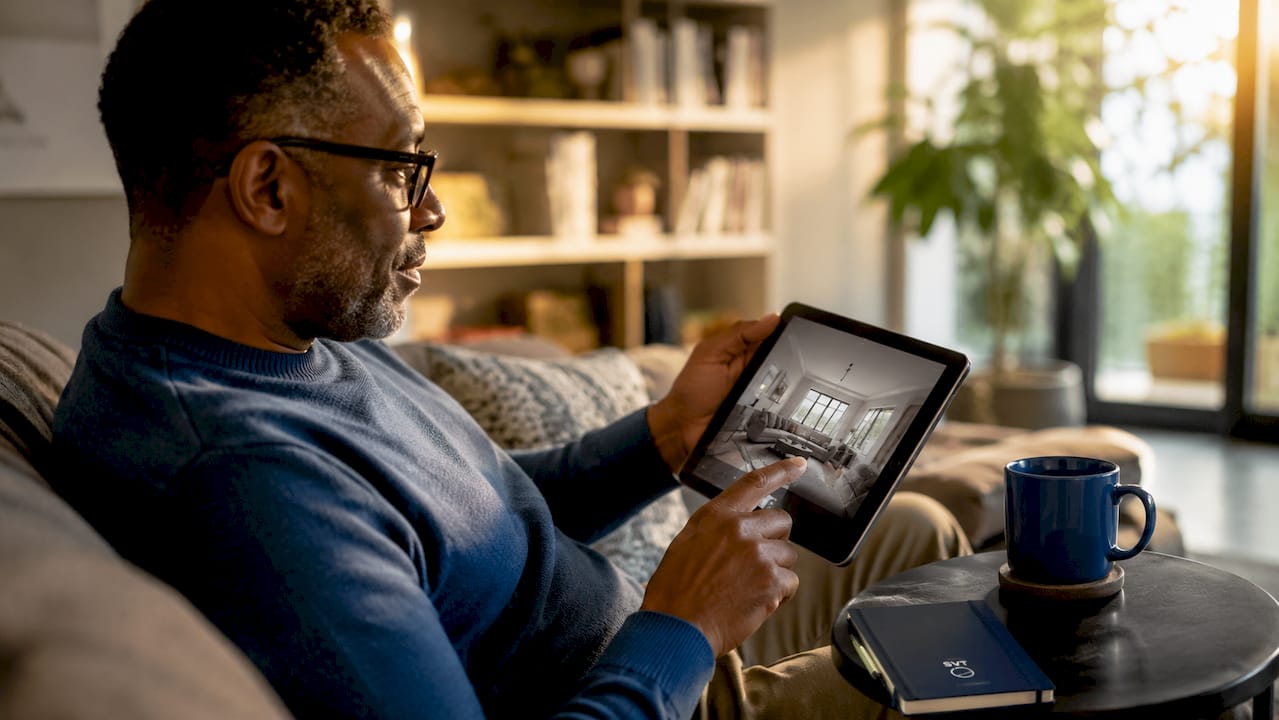
For sellers and agents, the numbers are compelling. Properties with virtual tours sell up to 31% faster and can achieve up to 9% higher sale prices compared to listings without tours. Speed and price are the two metrics sellers care about most, and mobile-friendly tours move both in the right direction.
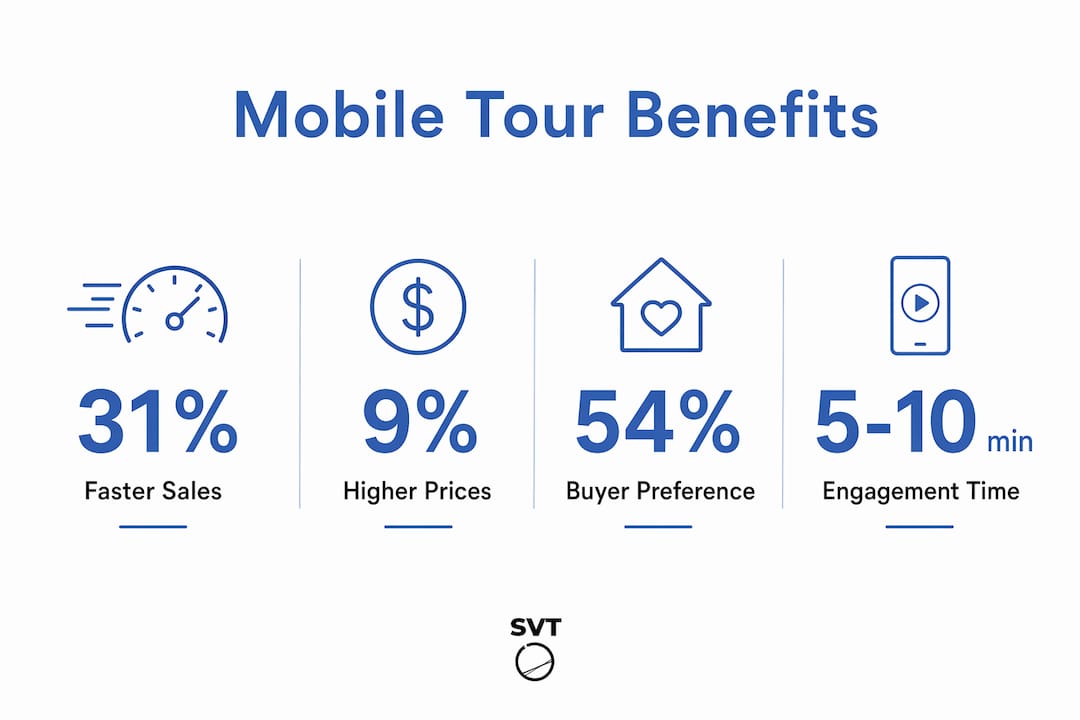
The impact of mobile real estate tours on listing visibility is equally significant. Listing portals reward longer engagement times with higher organic rankings. Buyers spend 5–10 minutes on 3D tours versus just 20–30 seconds on photo galleries. Longer engagement signals relevance to the platform algorithm, which pushes your listing higher in search results without any additional ad spend.
Here is a summary of the core benefits:
- Buyer convenience: Tours are accessible 24/7 on any smartphone without downloading an app.
- Higher engagement: Buyers spend significantly more time on listings with interactive tours.
- Faster sales: Listings with virtual tours sell up to 31% faster than those without.
- Better pricing: Virtual tour listings can command up to 9% higher sale prices.
- Wider reach: Remote buyers and relocation clients can evaluate properties without travel.
- Shared decision-making: Tours are revisited and shared with co-decision makers, extending the listing's influence beyond the first viewer.
Pro Tip: Embed the virtual tour directly on the listing page rather than linking to an external platform. Fewer clicks between a buyer and the tour means higher completion rates.
How does mobile optimization impact virtual tour performance?
Mobile optimization is the silent driver behind whether a virtual tour actually converts interest into action. A tour that loads slowly or requires awkward pinch-and-zoom navigation loses buyers within seconds. Mass-market real estate is a mobile-first, browser-first business, and buyers expect tours to open instantly with no hardware or software friction. That expectation is non-negotiable.
The user experience in real estate tours depends on four specific technical factors:
- Fast loading speed. A tour that takes more than three seconds to load on a mobile connection will lose a significant portion of viewers before they see a single room. Compress image assets and use progressive loading techniques.
- Swipe and gesture navigation. Mobile buyers navigate with their thumbs. Tours built for mouse clicks feel clunky on a phone. Swipe-based controls that mirror natural phone behavior keep buyers inside the tour longer.
- Sticky calls to action. A contact button or inquiry form that stays visible as buyers move through the tour captures interest at the moment of peak engagement. Successful mobile UX includes sticky calls to action and minimal form fields.
- Platform integration. Tours that embed directly into Zillow, Realtor.com, and MLS listings reach buyers where they already search. A tour that requires a separate link creates a drop-off point.
Digital curb appeal, defined as the immediate interactive mobile presentation of a listing, now determines whether buyers click and consider a property. Industry expert Jeff Riber argues that digital curb appeal has overtaken traditional physical curb appeal in purchase decisions. A well-maintained front yard means nothing if the mobile listing experience drives buyers away.
Pro Tip: Test your virtual tour on three different devices before publishing: an older Android phone, a current iPhone, and a tablet. If it loads and navigates well on all three, you have covered the majority of your buyer audience.
How do virtual tours qualify buyers and save agents time?
Virtual tours function primarily as filters, not as sales closers. That distinction matters for how you use them. A buyer who completes a full virtual tour and then requests a showing has already self-qualified. They know the layout, the room sizes, and the general condition of the property. That buyer is a serious lead.
Virtual tours reduce wasted showings by 30–50% as buyers eliminate unsuitable homes through detailed virtual inspection. For an agent managing 10 active listings, that reduction represents hours of recovered time each week.
The operational benefits extend beyond scheduling:
- Buyers arrive at showings pre-informed, which shortens the tour and sharpens the conversation.
- Remote buyers rely on virtual tours to make informed decisions without travel, broadening the buyer pool and increasing competition for your listings.
- Tours shared with family members or financial partners allow group decisions without coordinating multiple in-person visits.
- Agents can send a tour link in response to an inquiry and qualify interest before committing to a showing.
Virtual tours serve primarily as filters, enabling buyers to eliminate unsuitable homes before physical showings, reducing wasted agent time by up to 50%.
The practical result is a cleaner pipeline. You spend your time with buyers who have already decided the property is worth seeing in person. That is a fundamentally different conversation than walking a skeptical buyer through a home they found in a photo gallery.
How can agents maximize the impact of mobile-friendly tours?
Getting the most from interactive home viewing experiences requires more than just publishing a tour link. The production quality, deployment method, and promotion strategy all affect how many buyers engage and how deeply.
Start with the right technology. A mobile-first tour platform produces tours that load fast, navigate intuitively, and embed cleanly into listing portals. Platforms that were built for desktop and adapted for mobile often carry performance penalties that hurt the buyer experience.
Combine your virtual tour with professional photography and accurate staging. The tour provides spatial context. Photography provides the emotional first impression. Both working together produce stronger engagement than either alone.
Promote the tour across every channel where buyers spend time. Share the link in email campaigns, text message follow-ups, and social media posts. A short video clip of the tour walkthrough shared on Instagram or Facebook drives traffic back to the full interactive experience.
Track engagement metrics after publishing. Most tour platforms report average session length, room-by-room dwell time, and return visits. Those metrics tell you which rooms buyers find most compelling and which areas generate hesitation. Use that data to adjust your staging or photography before the next showing.
Common pitfalls to avoid:
- Publishing tours with slow load times on mobile connections
- Using tours that require app downloads or account creation
- Failing to embed the tour directly on the listing page
- Skipping the tour for lower-priced listings, where buyer competition is often highest
- Not updating the tour after significant renovations or staging changes
For agents building a repeatable workflow, Simple Virtual Tour supports mobile-optimized tour creation with an intuitive backend that requires no technical expertise. The platform's over 1,400 current users include agents who publish tours for every listing as a standard part of their marketing process.
Key Takeaways
Mobile-friendly virtual tours are the most effective tool for increasing buyer engagement, qualifying leads, and accelerating sales in the current real estate market.
| Point | Details |
|---|---|
| Buyer preference is clear | Over 54% of buyers in 2026 refuse to consider listings without virtual tours. |
| Sales performance improves | Properties with virtual tours sell up to 31% faster and can achieve up to 9% higher prices. |
| Mobile UX drives conversion | Fast loading, swipe navigation, and sticky calls to action determine whether buyers complete a tour. |
| Tours filter serious buyers | Virtual tours reduce wasted in-person showings by 30–50% by letting buyers self-qualify. |
| Promotion amplifies reach | Sharing tours across social media and messaging channels extends listing visibility beyond portal searches. |
What I've learned from watching mobile tours reshape real estate
The real estate industry spent years treating virtual tours as a premium add-on for luxury listings. That thinking is now outdated, and agents who still hold it are losing ground to those who treat every listing as a mobile-first presentation.
What I find most telling is the shift away from VR headsets toward browser-based mobile tours. Early virtual tour technology required hardware, software installs, and a certain tolerance for novelty. Buyers did not adopt it widely because the friction was too high. The moment tours became browser-based and phone-native, adoption accelerated. Convenience beat novelty every time.
The concept of digital curb appeal captures something agents need to internalize. The first impression of a property no longer happens at the front door. It happens on a phone screen, often during a commute or a lunch break. If that mobile experience is slow, clunky, or missing entirely, the buyer moves on before you ever get a chance to make your case.
The agents I respect most treat the virtual tour as the foundation of the listing, not the finishing touch. They build the tour first, use it to identify the property's strongest visual angles, and then build the rest of the marketing around it. That approach produces better photography, better staging decisions, and ultimately better offers.
The future of this technology points toward live virtual tour sessions, where agents guide buyers through a property in real time via mobile. That capability already exists in platforms like Simple Virtual Tour, which supports live session features alongside standard self-guided tours. The agents who get comfortable with that format now will have a clear advantage as buyer expectations continue to rise.
— Andrea
Simple Virtual Tour: mobile-ready tours for every listing
Real estate professionals who want to put these principles into practice need a platform built for mobile from the ground up.
Simple Virtual Tour gives you the tools to create unlimited virtual tours without technical expertise. The platform supports both cloud-hosted and self-hosted deployments, so you control your data and your costs. Features include live session capabilities, e-commerce integration, and an intuitive backend that works for agents at every experience level. Over 1,400 professionals already use it to publish mobile-optimized listings that engage buyers and qualify leads before the first showing. Visit Simple Virtual Tour to see how it fits your workflow.
FAQ
What are mobile-friendly real estate tours?
Mobile-friendly real estate tours are interactive virtual property presentations optimized for smartphones and tablets, allowing buyers to explore homes through a browser without downloading any app or using special hardware.
How do virtual tours affect property sale prices?
Properties with virtual tours can achieve up to 9% higher sale prices and sell up to 31% faster than listings without tours, based on multiple industry analyses.
Why do mobile-optimized tours rank better on listing portals?
Listing portals boost rankings for properties with longer engagement times. Buyers spend 5–10 minutes on 3D tours compared to 20–30 seconds on photo galleries, which signals relevance to the platform algorithm.
How do virtual tours reduce wasted showings?
Virtual tours let buyers self-qualify by inspecting layouts and details remotely. This reduces unnecessary in-person showings by 30–50%, saving agents significant time each week.
Do buyers share virtual tours with other decision-makers?
Tours are frequently revisited and shared with partners, family members, or financial advisors, extending the listing's reach and supporting group purchase decisions without additional in-person visits.