

Virtual tours directly support franchise location marketing by giving potential customers an immersive, interactive way to explore your location before they ever walk through the door. Here is what they deliver in practice:
- Customer self-qualification: Prospects explore the space remotely and arrive already confident, reducing wasted in-person visits and improving lead quality.
- Local SEO lift: Listings with virtual tours attract more clicks, longer dwell time, and more direction requests on Google Business Profiles, all of which improve local rankings.
- Conversion support: Embedding booking links, inquiry forms, and guided paths inside a tour converts passive viewing into real appointments and store visits.
- Reusable content: A single tour session generates teaser clips, still images, and guided highlight reels you can distribute across social media, email campaigns, and paid ads.
For franchise marketing managers, the practical value is clear: one well-built tour works across every channel you already use, and it keeps working long after the initial shoot.
How do virtual tours boost engagement and conversions for franchises?
Virtual tours increase time on page and interaction rates in ways that static photos simply cannot match. When a customer can navigate your space at their own pace, clicking through product displays or exploring seating arrangements, they spend far more time engaging with your brand than they would scrolling through a photo gallery. That extended engagement builds customer confidence by removing uncertainty about what to expect, which is especially powerful for new franchise locations entering a market.
The transparency a tour provides works as a trust signal. Customers can verify the layout, assess cleanliness, and confirm the environment matches their needs before committing to a visit. For appointment-driven franchise models, like fitness studios, jewelry retailers, or specialty food concepts, that preview directly supports booking rates. Research on 360-degree virtual experiences confirms that interactivity and guided paths increase behavioral engagement and revisit likelihood, which means customers who tour once are more likely to return to your page and eventually your location.
Key engagement and conversion benefits for franchise locations:
- Higher click-through rates on Google Business Profile listings
- Increased time on location pages, improving SEO engagement signals
- Better lead quality because prospects self-screen before contacting you
- More direction requests and phone calls from users who toured virtually
- Stronger brand perception through transparency and professional presentation
Where should you deploy virtual tours for maximum marketing impact?
Placement determines performance. The strongest placement for a franchise location tour is above the fold on location pages, where local search intent is highest. A visitor who lands on your "Chicago Lincoln Park" page is already looking for your specific location. Giving them an immediate tour experience, paired with a clear call to action, captures that intent at its peak.
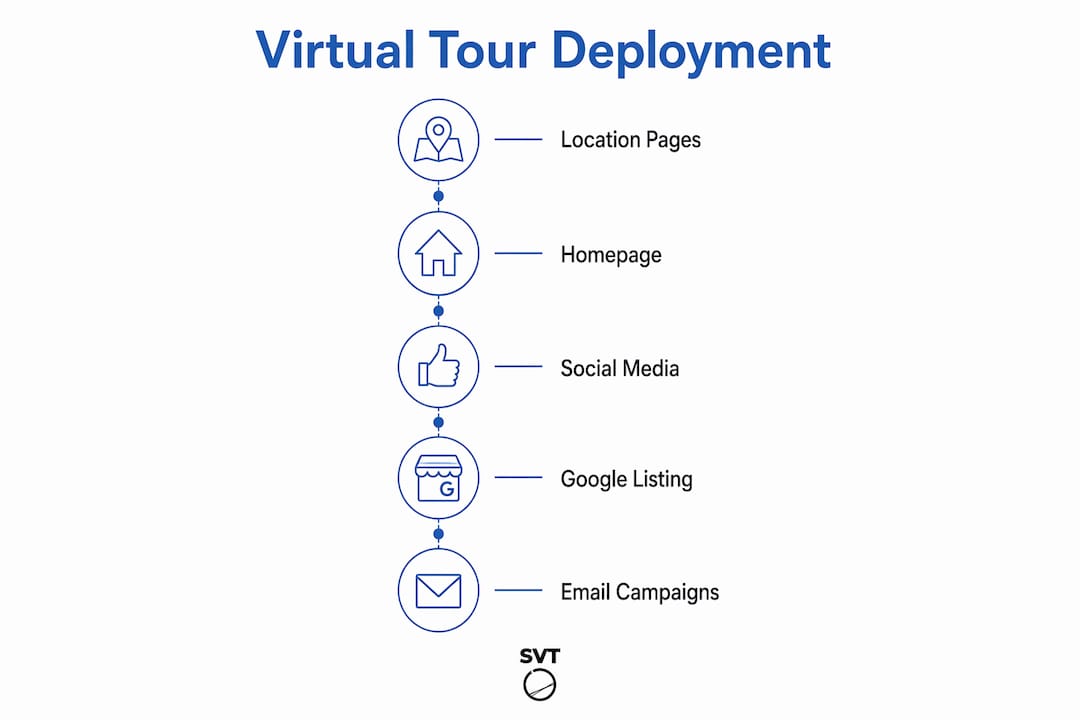
Google Business Profile integration is the other non-negotiable placement. Publishing 360-degree imagery through Google Street View puts your tour directly inside Google Maps, where it lives permanently at no ongoing hosting cost. The optimal approach combines both: a Google Street View tour for native Maps integration and a full-featured interactive tour on your franchise website for the complete immersive experience.
Beyond those two anchors, virtual tours perform well across several additional channels:
- Social media campaigns: Short teaser clips extracted from the tour stop the scroll and drive traffic to the full experience.
- Email marketing: A "preview our new location" link in a launch email generates higher click-through than a static image.
- Paid ads: Retargeting users who opened the tour but did not inquire is one of the highest-intent ad audiences you can build.
- Store locator pages: Most locator pages show only an address and hours. Adding a tour embed gives visitors a compelling reason to choose your location over a competitor's.
Pro Tip: Start with location pages before the homepage. Local search intent is strongest on individual location pages, so that is where a tour produces the most immediate lift.
How do you align a virtual tour with your specific franchise marketing goals?
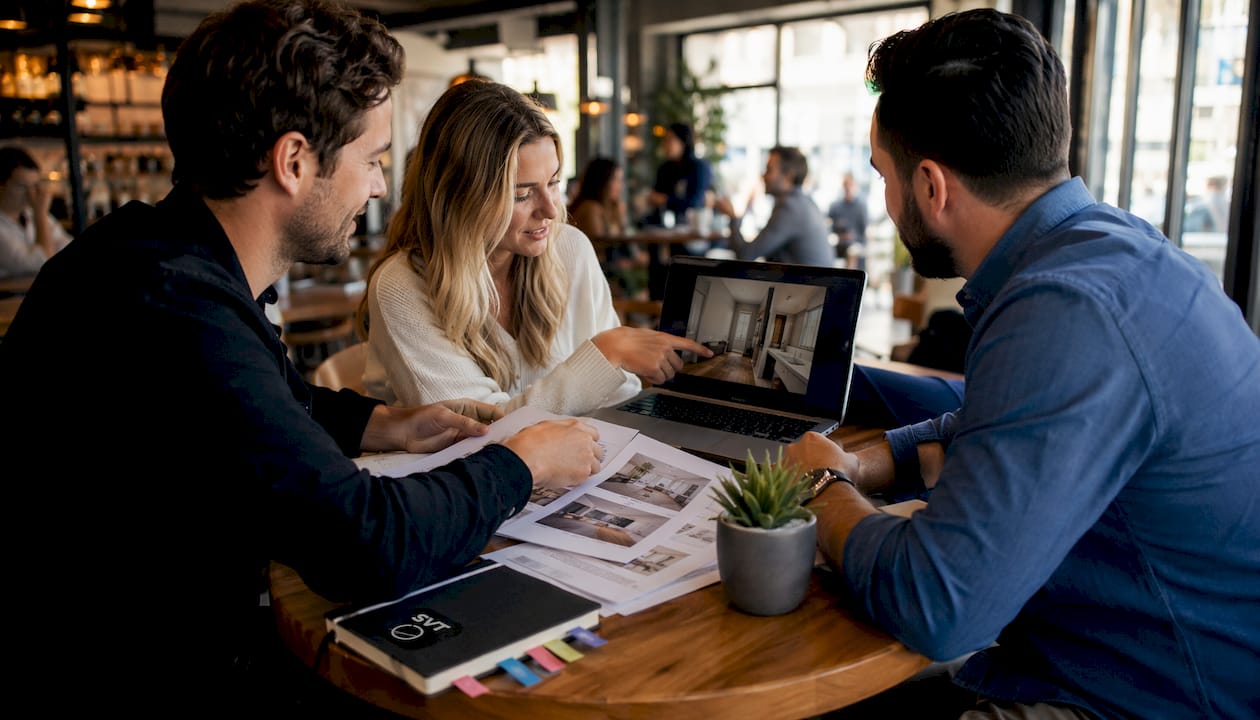
The most common mistake in franchise tour production is starting with the camera before defining the goal. Franchise marketing experts recommend setting a primary objective before the shoot, whether that is driving foot traffic, increasing appointment bookings, supporting leasing conversations, or building brand awareness for a new market entry. The goal shapes every decision that follows, from staging to the calls to action you embed inside the tour.

A tour built for foot traffic looks different from one built for leasing. The foot traffic tour emphasizes ambiance, product displays, and a "get directions" button. The leasing tour highlights square footage, layout flexibility, and an inquiry form for commercial prospects. Both use the same technology, but the design choices are completely different.
Practical alignment tips for franchise marketing teams:
- Define one primary goal per tour before production begins.
- Embed CTAs that match the goal: booking buttons for appointment-driven locations, inquiry forms for leasing, "get directions" for foot traffic.
- Write keyword-aligned descriptions around the tour embed to reinforce local SEO signals.
- Track the metrics that correspond to your goal: appointment bookings, direction requests, or form submissions, not just page views.
- Revisit the tour quarterly and update CTAs to reflect seasonal campaigns or new offerings.
Virtual tours function best as qualification tools paired with strong conversion paths. Research on virtual tour effectiveness confirms they reduce customer uncertainty and improve lead quality, but without integrated conversion paths, engagement rarely translates into measurable results.
Which franchise industries benefit most from virtual tours?
The industries where the physical space is part of the value proposition see the strongest results. Here is how virtual tours apply across key franchise sectors:
- Retail: Customers preview store layout, product displays, and fitting room placement before visiting. That "I know what to expect" feeling drives visits, especially for new locations in unfamiliar neighborhoods. Boutiques, showrooms, and specialty retailers benefit from showcasing lighting, design, and spaciousness in ways photos cannot convey.
- Food service: A restaurant tour lets diners preview seating arrangements, ambiance, and the overall feel of the dining room. For franchises with a strong design identity, this preview directly supports reservation intent.
- Fitness and wellness: Gym and studio franchises can display equipment zones, class flow, and locker room quality. Prospective members who tour a facility virtually arrive with realistic expectations and convert at higher rates during in-person visits.
- Event venues: Showing room transitions, staging configurations, and outdoor spaces gives event planners the spatial confidence they need to book without an in-person site visit. This is particularly valuable for franchise venue concepts operating across multiple markets.
Across all four sectors, the common thread is that showcasing space ambiance and operational flow increases visit intent by reducing the uncertainty that keeps prospects from committing.
Research-backed best practices for virtual tours in franchise marketing
The research on 360-degree virtual experiences points to a consistent finding: interactivity drives outcomes. Tours that include hotspots, narration, mini-maps, and guided highlight paths produce significantly higher behavioral engagement than passive walkthroughs. Adding these features is not a production luxury; it is what separates a tour that converts from one that gets viewed once and forgotten.
The strongest franchise tour strategies treat the tour as a content production hub, not a standalone asset. A single scan generates clips for social media, stills for email campaigns, guided paths for paid ads, and an embeddable experience for location pages. That content reuse extends the marketing reach of one production session across every channel without repeated shooting costs.
Best practices supported by research and field experience:
- Add hotspots, narration, and mini-maps to increase engagement and revisit likelihood.
- Combine a Google Street View tour for free Google Maps integration with a full-featured tour on your franchise website.
- Embed clear CTAs inside the tour itself, not just on the surrounding page.
- Use the tour as a content hub: extract teaser clips for social and email, then drive traffic back to the full experience.
- Stage the space carefully before shooting: remove clutter, polish displays, and ensure brand consistency across all locations.
On privacy and compliance: avoid capturing customers, employees, or any personally identifiable information during the shoot. For franchise locations in states with stricter privacy laws, confirm that interior imagery of publicly accessible commercial spaces does not require additional consent disclosures. Most franchise interiors qualify as publicly accessible, but if your location includes private consultation areas or medical spaces, those zones should be excluded from the tour.
Simple Virtual Tour gives franchise marketing teams the tools to build these experiences without requiring technical expertise. The platform supports unlimited interactive tours, live session capabilities, e-commerce integration, and both cloud-hosted and self-hosted deployment, so you retain full control over your data and reduce ongoing costs as you scale across locations.
Is the ROI on virtual tours worth the investment?
A well-executed virtual tour is a one-time production cost that generates marketing value across multiple channels for months or years. The production cost for a professional 360-degree tour can range from a few hundred dollars for a basic interior capture to more for a larger, feature-rich multi-room experience. That single investment feeds location pages, Google Business Profile, social campaigns, email marketing, and paid retargeting simultaneously.
The ROI case is strongest when you treat the tour as a marketing content hub rather than a one-off page element. Franchise brands that repurpose tour content across channels consistently report better engagement metrics and lower cost per qualified lead compared to campaigns relying on static photography alone. The efficiency gain comes from lead qualification: customers who tour a location before visiting arrive with realistic expectations, ask better questions, and require less sales effort to convert.
For multi-location franchise systems, the per-location cost decreases as your production workflow matures. Standardizing staging guidelines, CTA templates, and tour structure across locations also ensures brand consistency, which is a core operational requirement for any franchise system.
How do you integrate virtual tours with your existing marketing systems?
Virtual tours embed into most marketing systems with a standard iframe or URL link, which means the technical barrier is low. Your location pages, store locator, email platform, and ad manager can all reference the same tour link without custom development work.
For Google Business Profile integration, the Google Street View workflow requires imagery captured or uploaded through a Google-certified process. Once published, the tour appears natively in Google Maps and search results with no ongoing maintenance required. For your franchise website, embedding the full interactive tour on each location page takes a single embed code. Pair it with keyword-aligned copy, a clear CTA, and an FAQ section to maximize both engagement and local SEO signals.
For social and paid channels, the most effective workflow is to extract short teaser clips from the tour using a video editing workflow and use those clips as ad creative that drives traffic to the full tour. This creates a natural funnel: the clip generates curiosity, the tour builds confidence, and the embedded CTA converts intent into action. Tools designed for real estate video production can also help franchise marketers produce polished clips from tour footage efficiently.
Measuring performance is straightforward when you align metrics to your stated goal. Track time on page and scroll depth for engagement, direction requests and phone calls for foot traffic intent, and form submissions or booking completions for conversion. Google Analytics 4 event tracking and Google Business Profile Insights both provide the data you need without additional tooling.
What do franchise managers need to maintain and update virtual tours?
Maintaining a virtual tour does not require technical expertise, but it does require a clear internal process. Assign one person per location as the tour owner, responsible for flagging when a significant layout change, rebrand, or seasonal update warrants a reshoot. Most franchise locations need a full reshoot only when the physical space changes materially; minor updates like swapping CTA links or updating embedded booking URLs can be handled inside the tour platform without new photography.
Training franchise managers to update tours independently is straightforward with a platform built for non-technical users. Simple Virtual Tour's intuitive backend lets location managers update hotspot content, swap CTAs, and adjust guided paths without developer support, which matters when you are managing tours across dozens of locations. Build a short internal guide covering the three most common update tasks: updating a CTA link, adding a new hotspot, and adjusting the tour's starting viewpoint. That document, combined with the platform's own resources, covers the majority of day-to-day maintenance needs.
Schedule a quarterly review of each location's tour to confirm CTAs are current, staging still reflects the brand standard, and performance metrics are being tracked. A tour that was built for a grand opening campaign may need its CTA updated to reflect a loyalty program or seasonal promotion. Keeping that content current is what sustains the tour's conversion performance over time.
Key Takeaways
Virtual tours support franchise location marketing most effectively when they combine interactivity, clear conversion paths, and multi-channel distribution from a single production session.
| Point | Details |
|---|---|
| Lead quality over volume | Virtual tours help customers self-qualify before visiting, reducing wasted in-person appointments and improving overall lead quality. |
| Placement drives performance | Embedding tours on individual location pages above the fold captures the strongest local search intent and produces better engagement than homepage placement alone. |
| Interactivity converts | Adding hotspots, narration, and mini-maps significantly increases behavioral engagement and revisit likelihood compared to passive walkthroughs. |
| One scan, many channels | A single tour session generates clips, stills, and guided paths reusable across social media, email, paid ads, and location pages. |
| CTAs are non-negotiable | Tours without integrated booking links or inquiry forms generate engagement but rarely produce measurable ROI. |
Ready to build virtual tours that work across every franchise location? Simple Virtual Tour gives you unlimited customizable tours, live session capabilities, e-commerce integration, and both cloud-hosted and self-hosted options, all without requiring technical expertise.
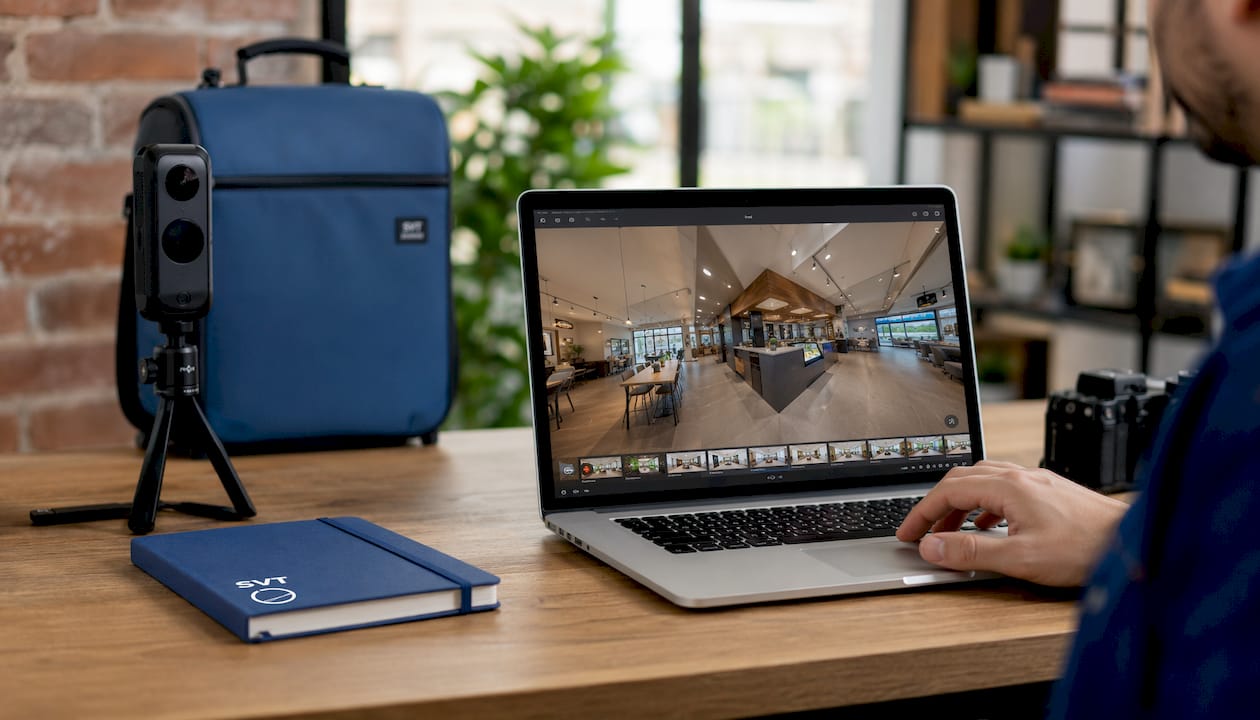
Over 1,400 users already use Simple Virtual Tour to create interactive experiences that engage customers and support real marketing outcomes. Whether you are launching a new location or standardizing your tour strategy across an entire franchise system, the platform is built to scale with you.