

Virtual tours are the single most effective tool for helping remote relocation buyers evaluate homes without traveling. They give buyers on-demand, immersive access to properties they cannot visit in person, letting them assess layout, scale, and spatial flow at their own pace. Listings with 3D tours receive up to 87% more views, and approximately 44% of buyers have made offers on homes they only viewed virtually. For agents working with out-of-state or corporate relocation clients, that is not just a feature. It is the foundation of a productive remote buying workflow.
Here is what virtual tours deliver for remote relocation scenarios:
- On-demand property access without flights, hotel stays, or rushed schedules
- Rapid filtering so buyers eliminate unsuitable homes before any showing trip
- Spatial clarity through dollhouse views, floor plan modes, and measurement tools
- Easy sharing with co-decision makers, spouses, or relocation coordinators who cannot travel
- Agent efficiency by pre-qualifying buyers and cutting unproductive in-person showings
- Scalable presentation through platforms like Simple Virtual Tour, which lets agents create unlimited customizable tours without technical expertise
Table of Contents
- What virtual tours actually are and how they work in real estate
- What remote buyers gain from virtual tours, and where the limits are
- How virtual tours change the agent's workflow when serving remote buyers
- Research-backed strategies for getting the most from virtual tours with relocation clients
- How remote relocations actually play out with virtual tours in practice
- Simple Virtual Tour gives your relocation listings a real advantage
- Key Takeaways
What virtual tours actually are and how they work in real estate
A virtual tour in real estate is an interactive, 3D walkthrough built from panoramic images captured at multiple points throughout a property. Unlike a video, the buyer controls the experience, choosing where to look, which room to enter next, and how long to spend in any space. Most tours run directly in a web browser or on a mobile device, requiring no special headset or software download.
The core viewing modes agents should know:
- Dollhouse view: A 3D miniature model of the entire home, giving buyers an immediate sense of overall volume and how floors connect
- Floor plan mode: A top-down layout for checking room logic and traffic flow
- Measurement tool: Lets buyers measure window widths, furniture placement areas, and room dimensions directly inside the tour
- Embedded data points: Advanced tours can include utility bill averages, seller disclosures, and repair histories attached directly to relevant rooms
That last capability matters most for relocation buyers. When a buyer in Chicago is evaluating a home in Austin, they need more than visuals. They need context. Simple Virtual Tour supports full customization of these interactive elements, so agents can build tours that answer the questions a remote buyer would ask before ever picking up the phone.
What remote buyers gain from virtual tours, and where the limits are
The primary benefit is time. A relocation buyer who can walk through 20 properties virtually before booking a flight arrives with a focused shortlist, not a marathon itinerary. Properties with virtual tours sell faster, largely because buyers who request in-person showings after a thorough virtual walkthrough are already pre-qualified. They know the floor plan, the ceiling heights, and the room proportions. They are validating, not discovering.
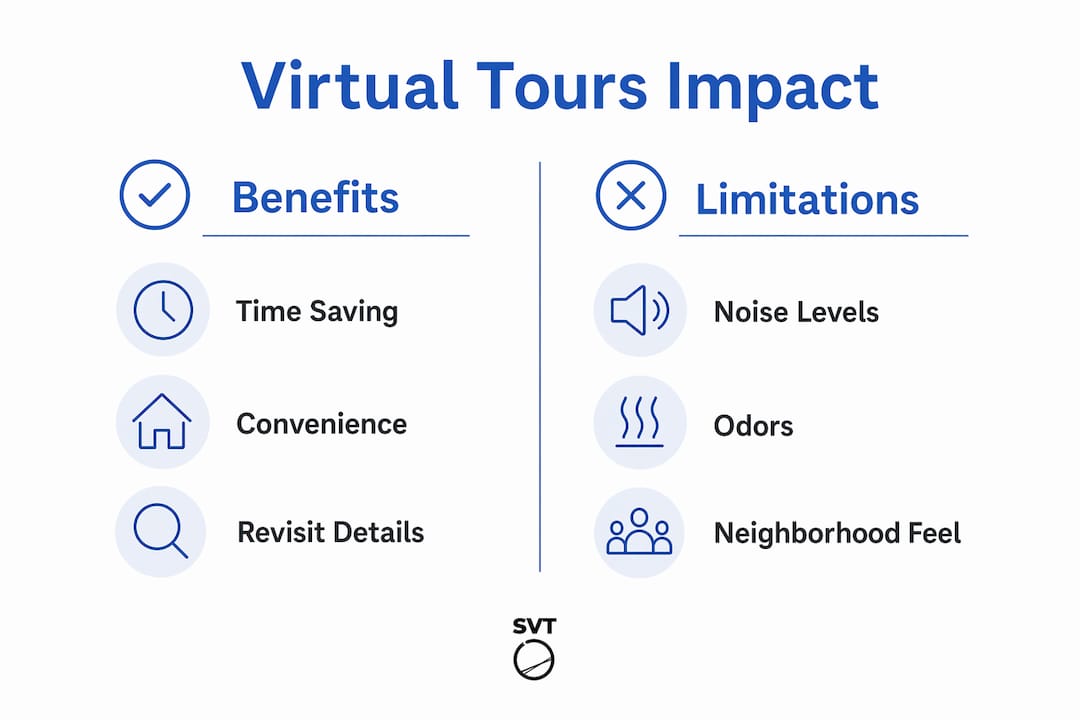
Buyers also use tours after in-person visits. They revisit the kitchen layout, check where the power outlets are, and share the link with a spouse or architect who could not attend the showing. That mobile-friendly accessibility keeps the property top of mind and the decision moving forward.

The limitations are real, though. Virtual tours cannot convey noise levels from a nearby highway, odors from a previous pet, or the feel of a neighborhood at 7 PM on a Tuesday. Tour quality also varies widely. A poorly lit or incomplete scan can actually mislead a buyer about a property's condition. For final trust-building and inspections, an in-person visit remains the standard. Virtual tours serve best as a powerful pre-qualification layer, not a complete replacement for physical access.
How virtual tours change the agent's workflow when serving remote buyers
The operational case for virtual tours is straightforward. Research from Harvard Business School analyzing over 75,000 home sales found that virtual tours primarily improve agent efficiency by reducing unproductive showings and focusing attention on qualified buyers. Every unnecessary showing an agent skips is roughly half a day of working time recovered, and the seller avoids the disruption of preparing the home for a buyer who was never a real prospect.
For agents with active relocation pipelines, the reach advantage compounds quickly. 62% of buyers actively search for listings that offer immersive 3D tours, filtering their results accordingly. An agent whose listings consistently include quality tours is automatically visible to a larger pool of serious remote buyers.
The adoption challenges are worth naming honestly. Producing high-quality tours requires either hiring a professional photographer or investing time in learning the workflow. Some agents also face resistance from sellers who are skeptical of the upfront cost. The practical solution is integrating tours into a broader digital toolkit that includes professional floor plans, drone photography for neighborhood context, and live guided session tours for buyers who want a synchronous walkthrough with the agent present.
Research-backed strategies for getting the most from virtual tours with relocation clients
Research from UT Dallas found that virtual tours shorten average time on market from 34 days to 19 days. The same study confirmed that tours fill critical information gaps when agents are unavailable, maintaining buyer momentum in competitive relocation markets.
The efficiency gain is real, but the price impact is more nuanced. The UT Dallas study found no direct effect on sale price when other listing quality factors were controlled. Virtual tours accelerate the process; they do not inflate the number on the contract.
The most effective agents treat tours as a filtering mechanism, not a marketing gimmick. Use them to help buyers quickly identify which properties are worth a plane ticket. Embed a "Digital Binder" within the tour itself, attaching utility bill averages, recent repair histories, and seller disclosures to the relevant rooms. This approach directly addresses the remote buyer's fear of hidden surprises and builds the kind of trust that converts virtual interest into a real offer.
Pro Tip: When a relocation buyer is deciding between two finalist properties, send them both tour links and ask them to do a side-by-side virtual walkthrough on the same evening. Buyers who compare tours directly often reach a decision days faster than those relying on memory or photos from a showing trip.
Millennials and Gen Z buyers treat virtual tours as a baseline expectation, using them to build emotional connection and make remote offers with confidence. Buyers over 45 use tours primarily as efficiency tools, checking accessibility and layout before committing to travel. Knowing which group you are working with shapes how you present and explain the tour experience.
How remote relocations actually play out with virtual tours in practice
Consider the scenario that plays out regularly in relocation markets across the US. A corporate transferee in New Jersey needs to be in Greenville, South Carolina within 60 days. Their agent sends a curated list of 12 properties, each with a full 3D tour link. The buyer and their spouse walk through all 12 from their couch over two evenings, use the measurement tool to check whether their dining table fits, and share three finalists with their relocation coordinator. By the time the buyer flies down for a two-day showing trip, they are visiting five properties they already know well, not sprinting through twelve unknowns.

The showing trip is productive because the virtual filtering already happened. Fewer homes means more time at each one. The buyer arrives to confirm what they already believe, and the offer comes faster because there are no surprises about layout or scale. Remote access tools have made this kind of pre-trip filtering a standard expectation for relocation buyers, not an exceptional service.
Military families and remote workers choosing lifestyle markets follow the same pattern. One partner travels; the other stays home and participates fully through the tour links. The agent who provides that experience wins the client. The agent who sends MLS photo links does not.
Simple Virtual Tour gives your relocation listings a real advantage
Remote relocation buyers need more than photos. They need the ability to explore properties interactively, measure rooms, and share tours with everyone involved in the decision. Simple Virtual Tour is built for exactly that workflow.
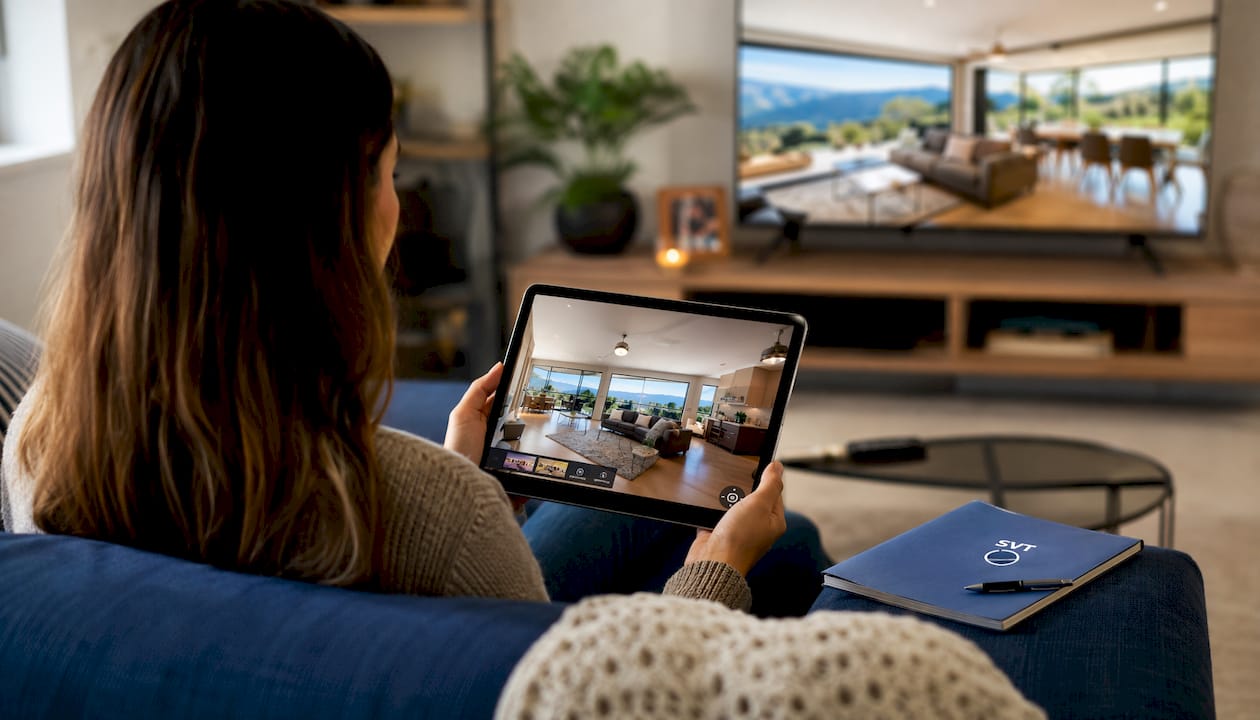
With over 1,400 active users, Simple Virtual Tour lets you create unlimited interactive tours with live session capabilities, embedded data points, and full customization, all without needing a technical background. The dual deployment model (cloud-hosted or self-hosted) gives you control over your data and keeps ongoing costs predictable. You can build a tour that functions as a complete Digital Binder, attaching disclosures and utility data directly to the rooms they relate to. For agents who want to avoid common tour mistakes and serve relocation clients at a higher level, Simple Virtual Tour is the practical starting point. Visit the product page to see pricing and get started today.
Key Takeaways
Virtual tours cut average time on market from 34 days to 19 days and are now expected by 62% of active buyers, making them a core operational tool for agents serving remote relocation clients.
| Point | Details |
|---|---|
| Time on market drops sharply | Virtual tours reduce average time on market from 34 days to 19 days, per UT Dallas research. |
| Buyer engagement multiplies | Listings with 3D tours receive up to 87% more views. |
| Majority buyer expectation | 62% of buyers actively filter for listings that offer immersive 3D tours before scheduling visits. |
| Offers happen remotely | Approximately 44% of buyers have made offers on homes they only viewed virtually. |
| Simple Virtual Tour | Supports unlimited customizable tours with live sessions and embedded data, built for relocation workflows. |