

Virtual tours are defined as interactive, 360-degree digital walkthroughs that allow buyers to explore a property remotely before committing to a physical visit. The role of virtual tours in listing conversion is direct: they increase buyer confidence through immersive visualization, which translates into more saves, more inquiries, and faster closings. Zillow's Buzz Index, which analyzed over 2 million homes in 2025, confirms that elevated buyer engagement predicts faster pending status and above-list-price sales. LCP Media research shows unit-level virtual tours generate measurable revenue lifts of 2.5% per community. These are not vanity metrics. They are leading indicators of transaction success.
How do virtual tours drive buyer engagement and improve listing conversion rates?
Virtual tours increase listing performance across every measurable engagement metric. Listings with virtual tours receive 40% more clicks than those without. That click volume matters because more clicks mean more buyers entering the consideration funnel, which directly raises the probability of a conversion.
The behavioral signals that follow a tour view are equally telling. When a buyer saves a listing, shares it, or requests a showing after a virtual tour, those actions are leading indicators of purchase intent. Zillow's methodology explicitly tracks progression to concrete buyer actions rather than raw view counts, because saves and shares predict transaction outcomes far better than passive page visits.

Virtual tours also improve lead quality, not just lead quantity. Virtual tours reduce unnecessary physical visits by 40%, which means the buyers who do schedule in-person showings have already self-qualified. Agents spend less time on low-intent walkthroughs and more time with serious buyers. That shift alone improves the lead-to-close ratio without any additional marketing spend.
Key engagement benefits of virtual tours include:
- Higher click-through rates: Listings with tours consistently outperform static photo listings in clicks and time-on-page.
- Improved save and share rates: Buyers who engage with a tour are more likely to save the listing for later review or share it with a partner.
- Reduced wasted showings: Buyers who tour virtually first arrive at physical showings with stronger intent.
- Broader geographic reach: Remote buyers and relocating professionals can evaluate properties without traveling, expanding the active buyer pool.
What is the measurable economic impact of unit-level virtual tours?
Unit-level virtual tours outperform generic building tours by a significant margin. A case study of 60 lease-up communities, each with at least 10 unit-level tours, found that unit-level tours increase rental income by an average of 2.5%, translating to $174,904.50 more per community annually. That figure represents a direct return on a relatively modest media investment.
The reason unit-level tours outperform building-level tours comes down to decision variables. A buyer or renter choosing between two similar units on different floors needs to see the actual view, the layout, and the natural light in that specific unit. A generic lobby or amenity tour does not answer those questions. Unit-level tours address decision-relevant variables like floor plan, floor level, and move-in timing, which reduces buyer uncertainty and accelerates commitment.
| Feature | Unit-level virtual tour | Building-level virtual tour |
|---|---|---|
| Decision variables addressed | Layout, floor, view, light | Lobby, amenities, common areas |
| Buyer confidence impact | High. Answers specific questions | Moderate. Sets general expectations |
| Lead-to-lease conversion | Measurably higher | Lower |
| Revenue uplift | 2.5% average rent increase | Minimal documented uplift |
| Buyer friction reduction | Significant | Limited |
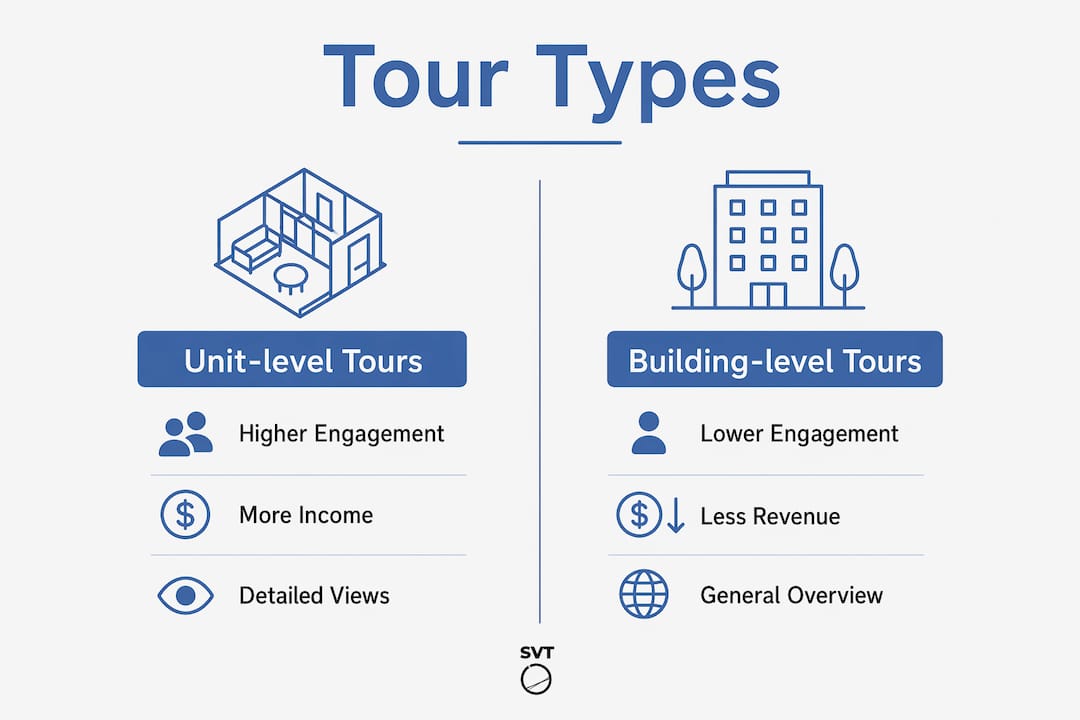
The data makes a clear case for investing in unit-specific content rather than stopping at building-level media. Controlling decision variables via unit-level tours reduces buyer friction, which supports quicker closings and higher achieved rents or sale prices.
Pro Tip: If you manage a multi-unit property, prioritize creating tours for your highest-value or slowest-moving units first. The revenue uplift from those specific units will justify the full media investment faster than a blanket rollout.
Which virtual tour features enhance listing conversion most effectively?
The features that drive conversion are not the flashiest ones. They are the ones that reduce cognitive friction and guide buyers toward a next step. Research on 360-degree tour literature confirms that high visual fidelity, interactivity, and AI guidance improve both cognitive and emotional engagement, which translates into higher purchase intent and a greater likelihood of revisiting the listing.
Specific features that consistently improve conversion outcomes include:
- Hotspots and information overlays: Clickable points within the tour that surface room dimensions, material specs, or neighborhood data keep buyers engaged longer and answer questions before they become objections.
- Mini-maps and floor plan integration: Buyers who can orient themselves within a property spend more time exploring and report higher confidence in their understanding of the layout.
- AI-guided navigation: Automated tour paths that highlight key selling features reduce the chance a buyer misses a critical room or view.
- Branding and customization: Tours that carry the agent's or developer's branding build trust. Tour customization for realtors is a documented factor in buyer confidence, because a polished, branded experience signals professionalism.
Mobile optimization is a non-negotiable feature in 2026. Mobile-optimized virtual tours correlate with longer engagement time and higher inquiry rates. A tour that performs poorly on a smartphone loses a significant portion of the buyer pool before they ever reach the inquiry stage.
Platforms like Simple Virtual Tour and Matterport both support high-resolution 360-degree tours with interactive elements. Simple Virtual Tour specifically offers live session capabilities, e-commerce integration, and a backend that does not require technical expertise, making it practical for individual agents and large property management teams alike.
Pro Tip: Track saves, shares, and inquiry clicks after each tour view rather than total view counts. Those next-step actions are the KPIs that actually predict whether a tour is converting, not how many people opened it.
What practical steps can real estate professionals take to maximize conversion?
Effective virtual tour marketing strategies require more than publishing a tour link on a listing page. The placement, promotion, and measurement of tours all affect conversion outcomes.
-
Place the tour prominently in MLS listings. Tours buried below the fold or hidden behind a secondary link lose engagement. The tour should appear as a primary media element alongside the lead photo.
-
Promote tours across multiple channels. Email campaigns, social media posts, and Google Business profiles all support tour distribution. Google Maps listings that include virtual tours show measurably higher engagement than those without.
-
Create unit-level tours for high-value and slow-moving inventory. Generic building media does not answer the specific questions that drive commitment. Unit-level content directly addresses the variables buyers weigh before making an offer.
-
Tailor tour content to buyer personas. A relocating executive needs different information than a first-time buyer. Tours with customizable overlays and narration can address different audience priorities within the same property.
-
Measure engagement KPIs weekly. Track saves, shares, time-on-tour, and inquiry rates. Use that data to identify which tours are underperforming and adjust placement, promotion, or content accordingly.
-
Integrate live guided tour sessions. Live session real estate tours combine the accessibility of virtual tours with the responsiveness of a live agent, which is particularly effective for high-value properties where buyers have detailed questions.
-
Avoid common pitfalls. Low-resolution imagery, slow load times, and tours that are not mobile-optimized all reduce engagement. A technically poor tour can actively damage buyer confidence rather than build it.
Key Takeaways
Virtual tours increase listing conversion by reducing buyer uncertainty, improving lead quality, and generating measurable revenue lifts when deployed at the unit level.
| Point | Details |
|---|---|
| Engagement predicts conversion | Saves, shares, and inquiries after a tour view are the most reliable indicators of purchase intent. |
| Unit-level tours outperform building tours | LCP Media data shows a 2.5% rent revenue increase, worth $174,904.50 per community annually. |
| 40% more clicks from tour listings | Listings with virtual tours receive significantly more buyer attention than static photo listings. |
| Mobile optimization is required | Tours that perform poorly on smartphones lose a large portion of the active buyer pool. |
| Next-step KPIs matter most | Measuring progression to saves and inquiries, not raw view counts, reveals true conversion performance. |
Why I think most agents are still measuring virtual tours the wrong way
After working closely with real estate marketing teams across different property types, the pattern I see most often is this: agents celebrate high tour view counts and treat them as proof the investment is working. View counts are not conversion. A buyer who opens a tour and closes it after 10 seconds has not moved closer to making an offer.
The Zillow Buzz Index methodology gets this right. It tracks whether engagement progresses to saves, shares, and showing requests. That progression is what predicts a faster pending status and a higher sale price. If your tour is generating views but not saves, the problem is usually one of two things: the tour quality is not building enough confidence, or the tour is not reaching the right buyers in the first place.
The unit-level tour data from LCP Media is the most underused insight in residential real estate marketing right now. A $175,000 annual revenue lift per community is a compelling number. Yet most property managers still invest only in building-level media and wonder why their lease-up timelines are long. The answer is that buyers need to see their specific unit, not a representative sample.
My prediction for the next two years is that AI-guided tours and live virtual sessions will become the standard for premium listings. Agents who combine recorded unit-level tours with live guided walkthroughs will close faster and at higher prices than those relying on static photos alone. The technology is already available. The gap is in adoption.
— Andrea
How Simple Virtual Tour helps real estate professionals convert more listings
Real estate professionals who want to act on the data in this article need a tool that makes unit-level tour creation practical, not a project that requires a production team.
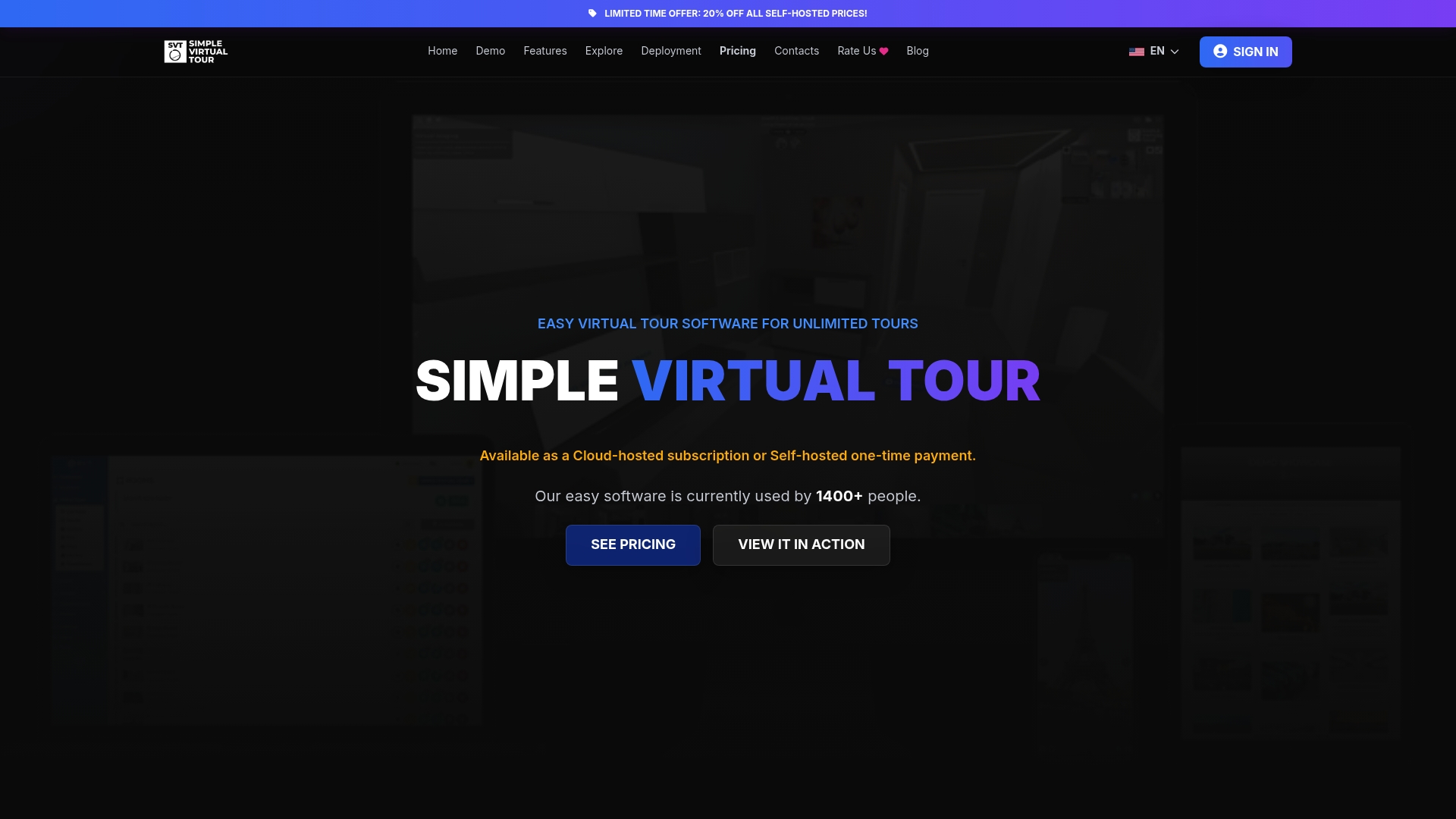
Simple Virtual Tour supports unlimited interactive tour creation with an intuitive backend that works without technical expertise. The platform offers both cloud-hosted and self-hosted deployment, giving you control over your data and reducing ongoing costs. With live session capabilities, mobile optimization, and branding customization built in, Simple Virtual Tour covers the features that research confirms drive conversion. Over 1,400 users currently rely on it to present properties and engage buyers. You can explore the platform and start building tours that move buyers from viewing to inquiring.
FAQ
What is the role of virtual tours in listing conversion?
Virtual tours increase listing conversion by building buyer confidence through immersive property visualization. They drive higher click rates, more saves, and better lead quality, all of which predict faster sales and higher transaction values.
How much do virtual tours increase listing clicks?
Listings with virtual tours receive 40% more clicks than listings without them, according to Realtor.com data. That increase in buyer attention directly raises the number of leads entering the conversion funnel.
Are unit-level virtual tours worth the investment?
Unit-level virtual tours generate an average 2.5% increase in rental income, translating to $174,904.50 more per community annually, based on LCP Media research across 60 lease-up communities. The return on investment is well-documented.
What KPIs should I track for virtual tour performance?
Track saves, shares, inquiry clicks, and showing requests rather than raw view counts. Zillow's Buzz Index methodology confirms that progression to these next-step actions is the most reliable predictor of conversion success.
Do virtual tours reduce the need for physical showings?
Virtual tours reduce unnecessary physical visits by 40%, which means buyers who do schedule in-person showings arrive with stronger purchase intent. That improves the lead-to-close ratio without additional marketing spend.