

Real estate buyers who move fastest and spend least share a common starting point: they know their buyer category, hold a preapproval letter, and have a buyer's agent before they tour a single property. Start there. Then use virtual tours to pre-screen listings remotely before committing to in-person visits.
Your immediate action list:
- Identify which buyer type you are (first-time, repeat, investor, or house hacker)
- Gather pay stubs, W-2s, two years of tax returns, and three months of bank statements
- Get preapproved by at least one lender this week
- Contact a HUD-certified housing counselor if this is your first purchase or your finances are complex
- Request virtual tours for every shortlisted property before scheduling in-person visits
Key Takeaways
Buyers who prepare early, shop multiple lenders, and use virtual tours to pre-screen properties consistently close faster and with fewer surprises.
| Point | Details |
|---|---|
| Start with preapproval | Gather income documents and get preapproved before touring any property. |
| Know your buyer type | Your category (first-time, investor, house hacker) determines financing options and strategy. |
| Closing costs are 2–5% | Budget this on top of your down payment; most first-time buyers put down 6–8%. |
| Hire a fiduciary agent | A buyer's agent negotiates on your behalf and can access off-market listings. |
| Simple Virtual Tour | Use live-session virtual tours to pre-screen properties remotely and shorten your search. |
Table of Contents
- What type of real estate buyer are you?
- How does the home buying process work, step by step?
- What mortgage options do real estate buyers have?
- Which government programs can help you buy a home?
- If you're buying as an investor, which path fits your situation?
- Why should you hire a buyer's agent?
- What does due diligence look like from offer to closing?
- What does buying a home actually cost?
- How can virtual tours help you evaluate properties remotely?
- Common mistakes buyers make and how to avoid them
- An editorial perspective on what buyers often miss
- Simple Virtual Tour helps buyers and agents move faster
- Sources
What type of real estate buyer are you?
Knowing your category determines which financing programs you qualify for, how much risk you can absorb, and which tools matter most.
- First-time primary residence buyer. You plan to live in the home, likely qualify for FHA or state assistance programs, and benefit most from HUD counseling and buyer education.
- Repeat buyer or trade-up buyer. You have equity from a prior sale, may carry a bridge loan or contingency, and need to coordinate timing between selling and buying.
- Buy-to-rent investor (landlord). You intend to rent the property out. Lenders require larger down payments (typically 15–25%), and your underwriting centers on projected rental income and reserves.
- House hacker. You buy a small multiunit property, live in one unit, and rent the others. Owner-occupied financing applies, so down payment requirements are lower, and rental income may offset your mortgage.
Quick self-check: Will you live there? If yes, you are a primary residence buyer. Do you plan to hold it more than five years? If no, flipping or REITs may suit you better. Are you comfortable managing tenants? If no, indirect options like REITs deserve a serious look.
Pro Tip: Investors should run cash flow projections before touring a property. First-time homebuyers should prioritize down payment assistance programs and schedule a free session with a HUD-certified counselor before applying anywhere.
How does the home buying process work, step by step?
The home buying process has five sequential phases. Skipping or reordering them is the most common source of lost deals and wasted money.
- Preapproval (1–7 days). Submit income documents to a lender. Lenders review credit score, debt-to-income ratio, employment history, down payment, and reserves to issue a conditional commitment letter. This letter sets your real budget and signals to sellers that you are a serious buyer.
- House hunting (2–12 weeks, variable). Work with your buyer's agent to set search criteria, review listings, and use virtual tours to pre-screen before scheduling in-person visits.
- Offer and negotiation (1–5 days). Analyze comparable sales (comps) with your agent, write a competitive offer, and include contingencies for inspection and financing.
- Underwriting and inspections (30–45 days). The lender verifies all documents. You order a general home inspection, appraisal, and any specialist inspections indicated by the property's condition.
- Closing (7–14 days after clear-to-close). Review the Closing Disclosure, complete a final walkthrough, wire funds, and sign documents.
Documents to have ready at every milestone: government-issued ID, preapproval letter, proof of funds for down payment and closing costs, homeowners insurance binder, and signed purchase agreement.
Typical phase durations at a glance: Preapproval: 1–7 days | House hunt: 2–12 weeks | Underwriting: 30–45 days | Clear-to-close to closing: 7–14 days
What mortgage options do real estate buyers have?
Choosing the right loan type can save tens of thousands of dollars over the life of a mortgage. Here are the four primary options and what distinguishes each.
Lenders evaluate four factors beyond loan type: credit score (most conventional loans require 620 minimum; FHA accepts 580 with 3.5% down), front-end DTI (housing costs below 28% of gross income), back-end DTI (all debts below 43–50%), and reserves (typically 2–6 months of mortgage payments in savings after closing).
Shopping multiple lenders and comparing Loan Estimate forms within a 14-day window limits the credit-score impact to a single hard inquiry. Compare interest rate, APR, lender fees, and points side by side.
Pro Tip: Paying discount points makes sense when you plan to hold the property more than five to seven years. If you expect to move or refinance sooner, keep cash and skip the points.
Which government programs can help you buy a home?
Federal and state programs can materially reduce upfront costs. Usa as programs worth exploring before you commit to a conventional path.
- FHA loans: Low down payment, flexible credit, available nationwide through approved lenders.
- VA loans: Zero down payment for eligible veterans, active-duty service members, and surviving spouses.
- USDA loans: Zero down payment for properties in eligible rural and suburban areas.
- Housing Choice Voucher (Section 8) homeownership: Qualifying voucher holders can apply voucher payments toward a mortgage instead of rent.
- State and local down payment assistance: Most state housing finance agencies offer grants or second mortgages for first-time buyers. Search your state's housing finance agency website for current programs.
To find local programs, contact your state housing finance agency, search HUD's counselor locator at hud.gov, or visit usa.gov directly.
Pro Tip: If your income is below 80% of your area's median, a HUD-certified housing counselor can identify programs you would not find through a standard lender search, often at no cost to you.
If you're buying as an investor, which path fits your situation?
Real estate belongs in many portfolios as a diversifier, but the right entry point depends on your capital, risk tolerance, and willingness to manage property.
| Strategy | Upfront Capital | Liquidity | Management Effort |
|---|---|---|---|
| Direct rental ownership | High (15–25% down) | Low | High |
| House hacking | Low (3.5–5% FHA) | Low | Medium |
| REITs / ETFs | Very low ($1+) | High | None |
| Crowdfunding / syndications | Medium ($500–$25K+) | Low to medium | None |
| Flipping | High (purchase + rehab) | Medium | Very high |
House hacking is a high-impact beginner strategy: owner-occupied financing keeps the down payment low, and rental income from other units reduces your net housing cost while you build equity. A buyer with $10,000 in savings is better served by REITs or a real estate crowdfunding platform than by stretching into a rental property with inadequate reserves.
Experienced investors focus on operational improvements, such as targeted renovations and fixing inefficiencies, to build cash flow and long-term value rather than relying on market appreciation alone.
Pro Tip: Max out index funds and retirement accounts before committing capital to direct real estate. Treat property as a diversifier, not a replacement for liquid investments, unless you genuinely want to be a landlord.
Why should you hire a buyer's agent?
A dedicated buyer's agent represents you, provides unbiased guidance, can access off-market listings, and negotiates on your behalf. That fiduciary relationship is the core difference between a buyer's agent and a listing agent, who legally represents the seller.
Concrete benefits:
- Access to full MLS data and off-market listings before they go public
- Negotiation on price, repairs, and contingencies with your interests as the priority
- Guidance on realistic offer strategy based on local comps
- Coordination of inspections, appraisals, and closing logistics
Interview questions to ask candidates:
- How many buyer-side transactions did you close in this zip code in the past 12 months?
- How do you handle dual agency if your brokerage also lists a property I want?
- What is your communication process during underwriting?
Red flags: An agent who pushes you to waive inspection contingencies, who represents both buyer and seller on the same transaction without clear disclosure, or who cannot provide recent local buyer references.
Pro Tip: Verify your agent's license on your state's real estate commission website and ask for two or three recent buyer-side references in your target neighborhood before signing a buyer agreement.
What does due diligence look like from offer to closing?
Due diligence protects your deposit and your long-term investment. Work through this checklist in order.
- General home inspection ($300–$500). A qualified inspector examines structure, roof, electrical, plumbing, and HVAC. Inspections can reveal $10,000 or more in issues that are not visible during a showing.
- Specialist inspections. Order pest, radon, sewer scope, or roof specialist reports when the general inspector flags concerns or the property is older.
- Appraisal. Your lender orders this independently. If the appraisal comes in below the purchase price, you can renegotiate, make up the gap in cash, or invoke your appraisal contingency to exit.
- Title search and title insurance. Confirms the seller has clear ownership and protects you against prior liens or ownership disputes.
- Survey. Verifies property boundaries, especially important for rural properties or those with fence or easement questions.
- Final walkthrough. Schedule this the day before closing to confirm the property's condition matches the contract and that agreed repairs are complete.
Pro Tip: Never skip the final walkthrough. Bring your inspection report and verify every negotiated repair item in person before you sign.
What does buying a home actually cost?
Budget for three distinct cost layers: upfront, closing, and ongoing.
Most first-time buyers put down 6–8% rather than 20%; FHA, VA, and USDA offer low- or no-down-payment options. Closing costs typically add 2–5% of the purchase price on top of the down payment.
Ongoing carrying costs to budget monthly:
- Homeowners insurance (typically $100–$200/month depending on location and coverage)
- Property taxes (varies widely by state and municipality)
- HOA fees where applicable
- Maintenance reserve (budget 1% of home value annually)
How can virtual tours help you evaluate properties remotely?
Virtual tours reduce buyer decision cycles by allowing remote pre-screening, so you eliminate unsuitable properties before spending time on in-person visits. This matters most for out-of-state buyers, busy professionals, and anyone managing a tight search timeline.
Quality checklist for evaluating a virtual tour:
- Full 360° coverage of every room, including basement, garage, and utility areas
- Accurate floor plan with room dimensions or measurement tools
- High-resolution imagery without stitching errors or blurred zones
- Clear navigation between spaces with labeled hotspots
- Live-session capability so you can ask questions in real time
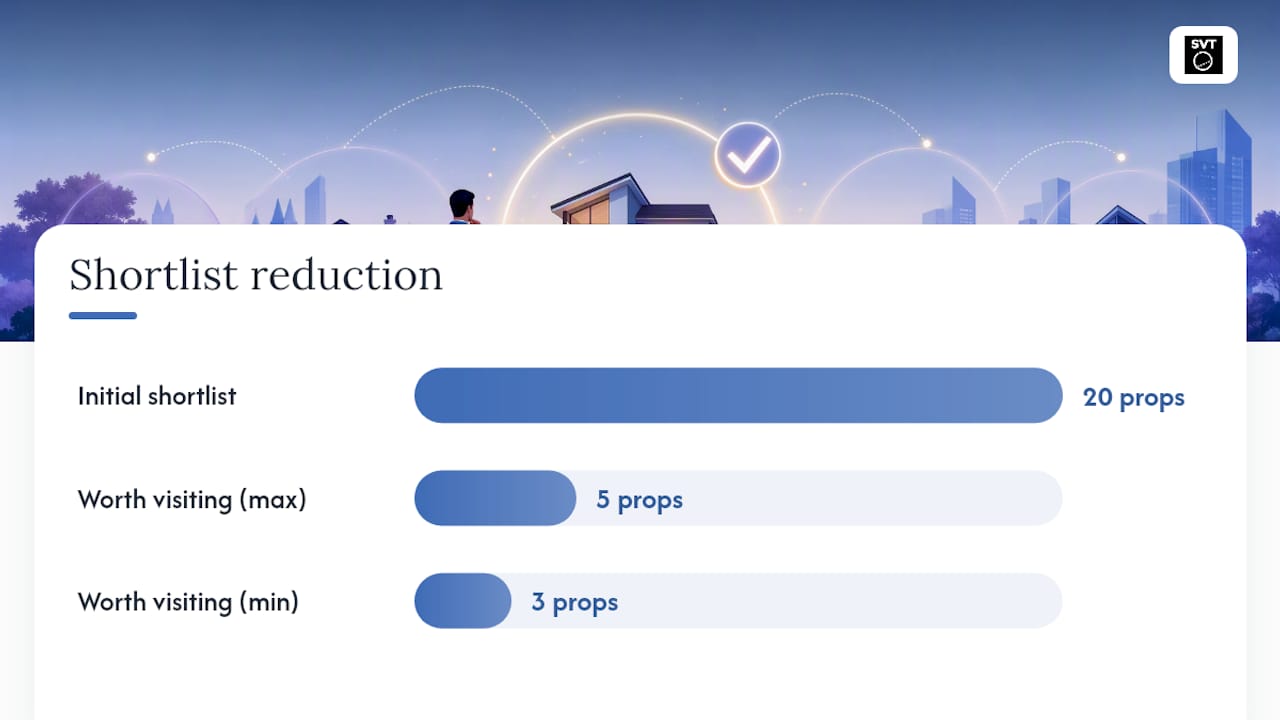
Remote relocation buyers use virtual tours to narrow a list of 20 properties down to 3–5 worth visiting in person, cutting travel costs and compressing the search phase significantly.
Pro Tip: Request a live guided tour session with the listing agent. Ask them to walk through the HVAC system, water heater, and appliances while you watch. Systems that are hard to evaluate in photos are easy to assess live.
| Point | Details |
|---|---|
| Pre-screen remotely | Use virtual tours to cut a long property list before scheduling any in-person visits. |
| Check tour quality | Confirm 360° coverage, accurate dimensions, and live-session availability before relying on a tour. |
| Live sessions add depth | A guided live session lets you inspect systems and ask targeted questions in real time. |
Common mistakes buyers make and how to avoid them
Mistakes that cost money:
- Skipping preapproval and losing a property to a buyer who had one ready
- Underestimating closing costs and reserve requirements, leaving you cash-poor at closing
- Waiving the inspection contingency in a competitive market without understanding the risk
- Over-leveraging by stretching to the top of your preapproval without leaving reserves
Red flags in listings and disclosures:
- Inconsistent or vague seller disclosures (water damage described differently in two documents)
- Chronic deferred maintenance visible in listing photos (peeling paint, sagging gutters, overgrown landscaping)
- Title irregularities or unresolved liens discovered during the title search
- Seller insisting on an unusually fast closing timeline without a clear reason
**When to walk away vs. If the seller refuses and the appraisal also comes in low, invoke your contingencies and exit rather than absorbing both risks.
An editorial perspective on what buyers often miss
Most buyers focus on the property and underestimate the process. The biggest financial mistakes we see are not bad property choices; they are structural errors made before the first offer: no preapproval, no agent, no reserves, and no pre-screening workflow. Virtual tours have genuinely changed how efficient a buyer's search can be, and agents who build live-session walkthroughs into their workflow close faster with fewer surprises.
For complex affordability questions, consult a HUD-certified housing counselor and shop at least three lenders before committing. No single lender has the best rate for every borrower.
Simple Virtual Tour helps buyers and agents move faster
Buyers and agents who use interactive virtual tours cut the pre-screening phase from weeks to days. Simple Virtual Tour gives you the tools to create and share unlimited 360° tours with live-session walkthroughs, built-in measurement tools, floor-plan export, and your choice of cloud-hosted or self-hosted deployment for full data control.
Key features relevant to buyers and agents:
- Unlimited interactive tours with 360° panorama and photo support
- Live session capability for guided remote walkthroughs with real-time Q&A
- Measurement and floor-plan tools to verify room dimensions remotely
- Cloud and self-hosted options so your data stays where you want it
- AI multimedia editing and custom branding for professional presentations
You keep control of your data, and there are no per-tour fees. Start a free trial or explore plans to see how it fits your workflow.
Sources
This article is general information, not a substitute for advice from a qualified financial advisor. Consult a qualified financial professional about your own circumstances before acting on anything here.