

3D walkthroughs can replace most traditional open houses for the majority of U.S. listings right now. They expand your reach beyond local buyers, screen out low-intent visitors before a single key is turned, and deliver in-person showings that are shorter, more focused, and far more likely to produce offers. According to industry reporting, listings with interactive 3D tours can sell faster and attract more qualified leads than photo-only listings. Simple Virtual Tour is one platform built specifically to help agents and sellers deploy this workflow without a steep learning curve.
The short version:
- 24/7 global access: Buyers tour on their schedule, from any device, anywhere in the country or world.
- Built-in screening: Buyers who request an in-person showing after a 3D tour have already self-qualified, reducing wasted showings.
- Time and safety gains: Sellers avoid repeated home preparations and strangers walking through unsupervised.
Table of Contents
- Why 3D walkthroughs outperform open houses on seller and agent metrics
- What the data says about 3D tour engagement and sales outcomes
- How 3D tours change buyer behavior and produce conversion-ready visits
- How to implement 3D walkthroughs: capture, hosting, costs, and distribution
- When open houses still make sense and how to run a hybrid strategy
- How to handle common objections to 3D walkthroughs
- Key Takeaways
- A practitioner's perspective on going virtual-first
- Simple Virtual Tour makes the switch straightforward
- Useful sources and further reading
Why 3D walkthroughs outperform open houses on seller and agent metrics
The core advantage is reach. A traditional open house pulls from a local radius during a two-hour Saturday window. A 3D walkthrough is available to any buyer, anywhere, at any hour. That shift alone changes who sees your listing and how seriously they arrive.
Beyond reach, the screening effect is where agents feel the biggest operational difference. Buyers who complete a full virtual walkthrough before requesting a showing have already mentally walked the floor plan, checked ceiling heights, and decided the kitchen layout works for them. They arrive at the physical showing to confirm, not to explore. That changes the entire dynamic of the visit.
As of early 2026, roughly 28% of listings include an interactive 3D tour. That gap is a competitive advantage for agents who adopt now.
Direct outcomes sellers and agents can expect:
- Fewer low-intent visitors requesting in-person access
- Higher lead-to-offer conversion rate from showings that do happen
- Stronger listing performance on digital platforms where engagement signals matter
- Reduced staging and cleaning cycles between showings
- A measurable digital footprint (session time, room views) that informs follow-up strategy
Pro Tip: When presenting 3D tours to a skeptical seller, frame it as raising buyer quality, not removing in-person visits. The goal is fewer showings with better outcomes, not a fully contactless sale.
What the data says about 3D tour engagement and sales outcomes
The evidence connecting virtual walkthroughs to faster sales and better conversion is consistent across multiple industry sources.
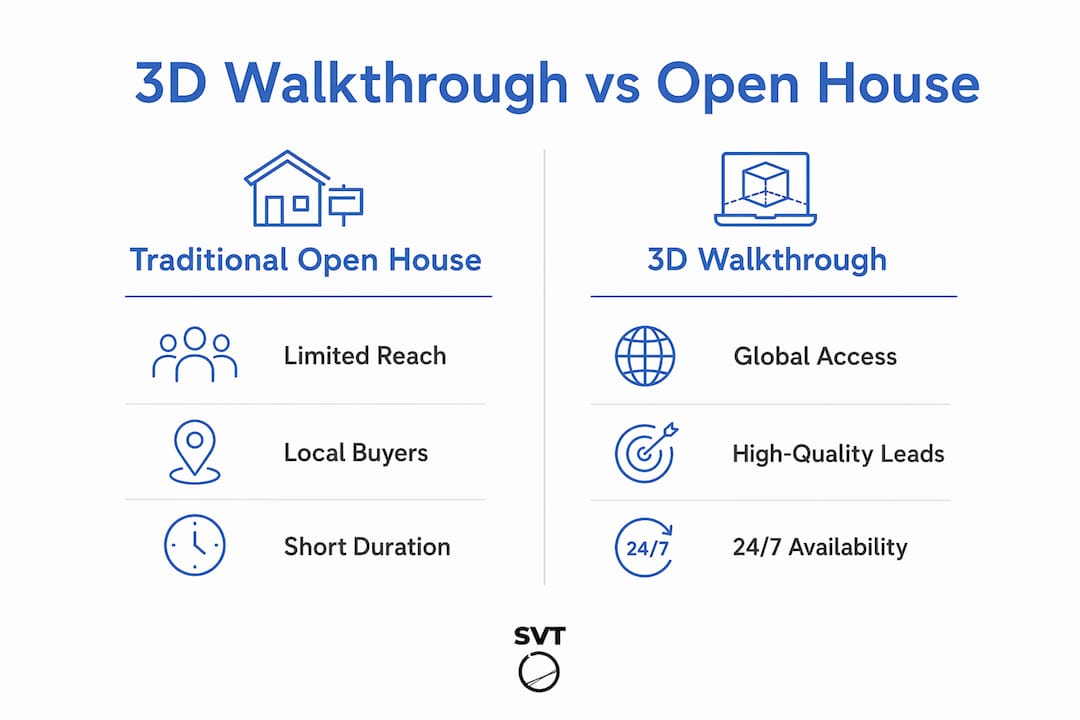
| Metric | Figure | Source |
|---|---|---|
| Faster time on market | Faster sales | Maven X / platform studies |
| More qualified leads | More qualified leads | Maven X / platform studies |
| Offers without physical visit | 71% of virtual-tour buyers | Industry analysis citing NAR/Q1 2026 |
| Current U.S. adoption rate | ~28% of listings | Buildreins, Q1 2026 |
The session-duration finding is particularly telling. Interactive 3D tours hold buyers' attention for minutes of active exploration, compared to the passive scroll of a photo gallery. That extended engagement correlates with higher offer probability because buyers complete the same mental evaluation they would during a physical visit.
Industry analysts now frame 3D walkthroughs as a sales channel, not a marketing add-on. When produced and deployed correctly, they shorten sales cycles and convert expensive in-person visits into high-value confirmations rather than exploratory browsing.
The NAR and related industry reporting through early 2026 confirm rising adoption and conversion from interactive virtual tours, with virtual-first buyers consistently showing higher intent at the point of in-person contact.
How 3D tours change buyer behavior and produce conversion-ready visits
A buyer who tours a property virtually before visiting in person behaves differently at the showing. They have already resolved the basic spatial questions: does the living room connect to the kitchen, how large is the primary bedroom, does the backyard feel private? What they need from the in-person visit is sensory confirmation, not discovery.
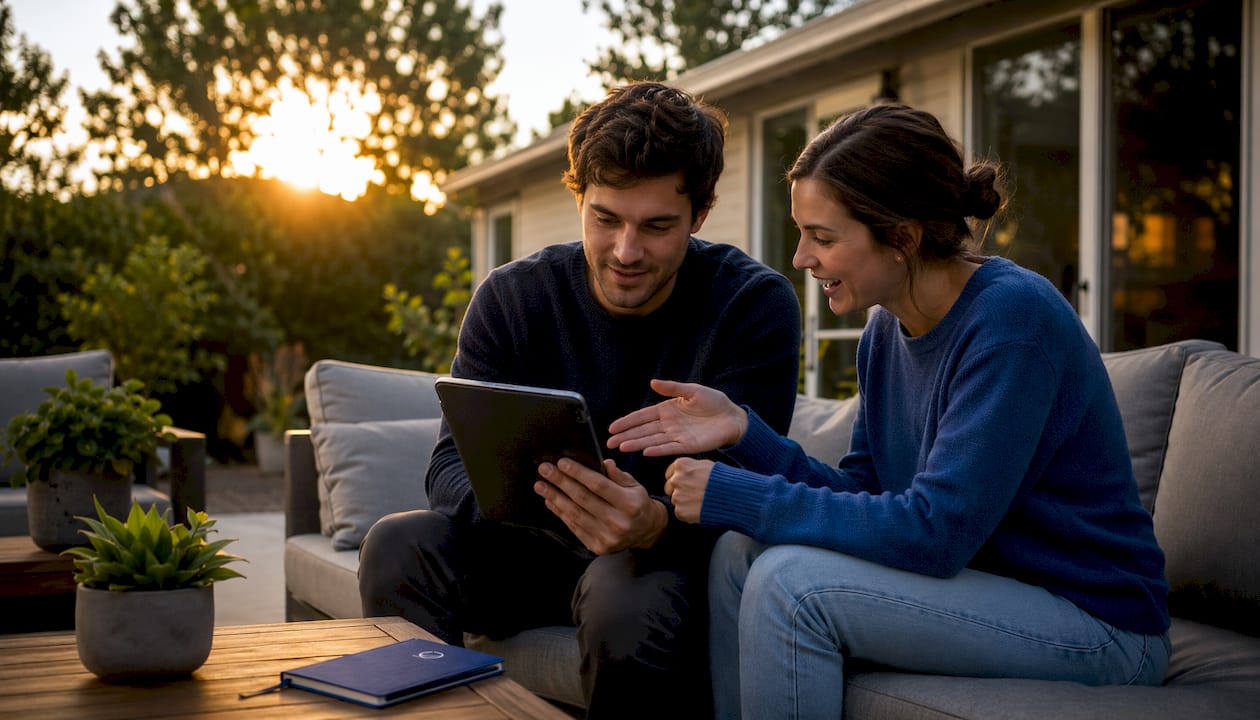
This behavioral shift matters for how you prioritize and prepare for showings. Buyers who spend significant time in specific rooms during a virtual tour signal genuine interest in those spaces. A buyer who repeatedly returns to the dollhouse view is evaluating overall flow and layout, often a sign they are comparing the floor plan against their lifestyle needs.
What buyer behavior in a 3D tour tells you:
- Extended time in the kitchen or primary suite signals those spaces are decision factors
- Multiple dollhouse-view returns indicate the buyer is evaluating overall layout and flow
- Short session duration (under two minutes) suggests the property did not meet their criteria
- Repeat visits to the same tour often precede a showing request
Agents who use tour analytics as a lead-scoring filter report a meaningful difference in showing quality. When you know a buyer spent eight minutes in the primary suite and returned to the tour twice, you walk into that showing with context no open-house sign-in sheet could provide.
Pro Tip: Before the in-person showing, review the buyer's tour session data if your platform provides it. Tailor your talking points to the rooms they spent the most time in. That specificity builds trust faster than a generic walkthrough script.
How to implement 3D walkthroughs: capture, hosting, costs, and distribution
Getting a 3D tour live is a straightforward process once you understand the workflow. The steps below apply whether you are an agent managing your own listings or a seller working with a team.
Capture options:
- Professional 3D scan: A photographer with a dedicated 3D camera (such as a 360-degree spherical camera) produces the most accurate spatial model. Best for mid-to-high-value listings where accuracy and presentation quality are non-negotiable.
- Agency-managed capture: Some virtual tour providers handle the full shoot and post-production. Higher cost, less control over turnaround time.
- DIY workflow: Platforms like Simple Virtual Tour support upload from compatible 360-degree cameras, making self-capture viable for agents with moderate technical comfort. Cost is lower; quality depends on preparation.
Implementation checklist:
- Schedule the capture session at least 48 hours after final staging is complete.
- Stage specifically for 3D: remove personal photos, clear countertops, and open all interior doors to maximize spatial flow.
- Capture during daylight with consistent interior lighting to avoid dark corners that reduce buyer confidence.
- Upload to your hosting platform and configure access controls (public, link-only, or password-protected).
- Embed the tour on your MLS listing page and your personal listing website. For technical guidance on embedding, the embedded property tour guide covers MLS compatibility and iframe setup.
- Distribute the tour link via email to your buyer database, social media, and any paid digital campaigns.
- Enable tour analytics and check session data within 48 hours of publishing to identify high-intent leads.
- Follow up with buyers who completed the full tour before reaching out to those who dropped off early.
Typical costs and ROI framing:
Professional 3D capture for a residential listing generally runs $150–$400 depending on property size and market. DIY capture with a mid-range 360-degree camera and a platform subscription reduces per-listing cost significantly over time. The ROI calculation is straightforward: one fewer unnecessary showing saves an agent one to two hours and a seller one full home preparation cycle. Across a listing with multiple showings, the time savings alone often exceed the production cost.
For agents embedding tours on their listing sites, website uptime monitoring is worth considering. A tour that fails to load for a remote buyer is a lost lead.
Pro Tip: Stage for 3D differently than for photography. A wide-angle photo can hide clutter at the edges of a frame. A 3D tour captures 360 degrees, so every surface in every room is visible. Do a full room-by-room sweep before the capture session.
Pro Tip: If a seller is concerned about privacy, exclude sensitive areas (home office with documents, medication storage, secondary entrances) from the tour path. Most platforms let you block specific rooms or angles during capture or post-processing.
When open houses still make sense and how to run a hybrid strategy
Virtual-first does not mean virtual-only. There are specific scenarios where an in-person open house adds genuine value that a 3D tour cannot replicate.
Use cases where in-person events remain valuable:
- First-weekend launches in high-demand local markets where competitive bidding is the goal
- New-development grand openings where the neighborhood and builder story matter
- Broker caravans and agent previews where professional relationships drive referrals
- Luxury listings where the sensory experience (materials, light, scale) is a primary selling point
Recommended hybrid workflow:
- Publish the 3D tour on day one of the listing, before any in-person event.
- Use the first week of tour analytics to identify high-engagement buyers.
- Host one targeted in-person open house in week one or two, inviting pre-qualified leads directly.
- Use the open house to create urgency and competitive atmosphere among buyers who have already toured virtually.
- After the open house, send the tour link to attendees as a follow-up reference tool.
Two use-case examples:
Suburban single-family listing: Publish the 3D tour Monday. By Friday, analytics show six buyers who spent more than five minutes and returned twice. Invite those six to a Saturday open house alongside general promotion. The result is a room with motivated, informed buyers rather than curious neighbors.
Luxury out-of-market listing: The primary buyer pool is relocating from another state. The 3D tour does the heavy lifting for initial qualification. One targeted broker preview for local agents handles the in-person component. The seller avoids multiple weekend disruptions.
Pro Tip: Use the hybrid model as a seller conversation tool. Show the seller a timeline: tour goes live Monday, analytics review Friday, targeted open house Saturday. That structure feels controlled and professional, which reduces seller anxiety about the process.
How to handle common objections to 3D walkthroughs
"I don't want strangers seeing inside my home online." Access controls solve this. Most platforms let you restrict tour access to link-only sharing, require a password, or exclude specific rooms from the tour path. You can also omit any area that contains personal information or valuables. Tour customization options give sellers meaningful control over what is visible and to whom.
"Buyers won't know how to use it." Mobile-friendly tour formats work on any smartphone browser without a download. The navigation is intuitive: tap to move, pinch to zoom, tap the dollhouse icon for the overhead view. Most buyers figure it out within 30 seconds. For older buyers or those less comfortable with technology, a brief instruction note in the listing description removes the barrier.
"The tour might misrepresent the property." Accuracy depends on capture quality. Poor-quality 3D models that distort scale or lighting reduce buyer trust and can harm conversion. Professional capture with proper lighting and a calibrated camera produces a model that matches the physical space. Include the property's measured square footage and room dimensions in the listing to give buyers a reference point alongside the tour.
"What are the legal and disclosure requirements?" In the U.S., standard disclosure obligations apply regardless of how a buyer first views a property. A 3D tour does not replace written disclosures about material defects, lead paint, or other required items. Include your standard disclosure language in the MLS listing and confirm with your broker that your tour workflow meets state-specific requirements. Data privacy considerations apply to any analytics you collect from tour sessions; consult your brokerage's data policy before sharing session-level data with third parties.
Mitigation steps for technical issues:
- Confirm the tour loads correctly on iOS Safari, Android Chrome, and desktop browsers before publishing.
- Include a fallback video walkthrough link for buyers whose devices cannot render the 3D model.
- Test the embedded tour on your listing page after every MLS update to catch broken embeds early.
Key Takeaways
3D walkthroughs replace most traditional open houses by delivering a wider buyer pool, higher-quality showings, and measurable engagement data that photo-only listings cannot match.
| Point | Details |
|---|---|
| Faster sales, better leads | Industry studies report faster sales and more qualified leads compared with photos only. |
| High buyer conversion | Analysis citing NAR data found that 71% of buyers who toured virtually made offers without a physical visit. |
| Low adoption = competitive gap | Only about 28% of U.S. listings currently include a 3D tour, giving early adopters a clear advantage. |
| Hybrid strategy wins | Publish the 3D tour first, then use analytics to run one targeted in-person open house for pre-qualified buyers. |
| Simple Virtual Tour | Simple Virtual Tour provides cloud-hosted or self-hosted tour creation with analytics, live sessions, and MLS-compatible embeds. |
A practitioner's perspective on going virtual-first
The conventional wisdom in residential real estate is that open houses build buzz. That is true in a handful of scenarios: a hot first weekend in a competitive zip code, a new-development launch, a broker caravan. But for the average listing, the open house is more ritual than strategy. Most visitors are neighbors, curious browsers, or buyers who are months away from making an offer. The seller cleans the house twice, the agent spends a Sunday afternoon, and the result is a sign-in sheet with five names and one serious lead.
What the data actually shows is that buyers who engage deeply with a 3D tour before requesting a showing are operating differently. They have already done the work. The in-person visit is a confirmation, not an audition. That shift compresses the sales cycle and raises the quality of every conversation you have at the property.
The piece most agents underestimate is the analytics layer. Knowing which rooms a buyer spent time in before they walk through your door is a genuine tactical advantage. It lets you lead with what matters to them, not what you assume matters. That specificity is what separates a productive showing from a generic tour.
Simple Virtual Tour makes the switch straightforward
Replacing open houses with a virtual-first workflow requires a platform that handles the full process without adding complexity. Simple Virtual Tour is built for exactly that: agents and sellers who want to create unlimited interactive tours, publish them quickly, and use engagement data to prioritize their follow-up.
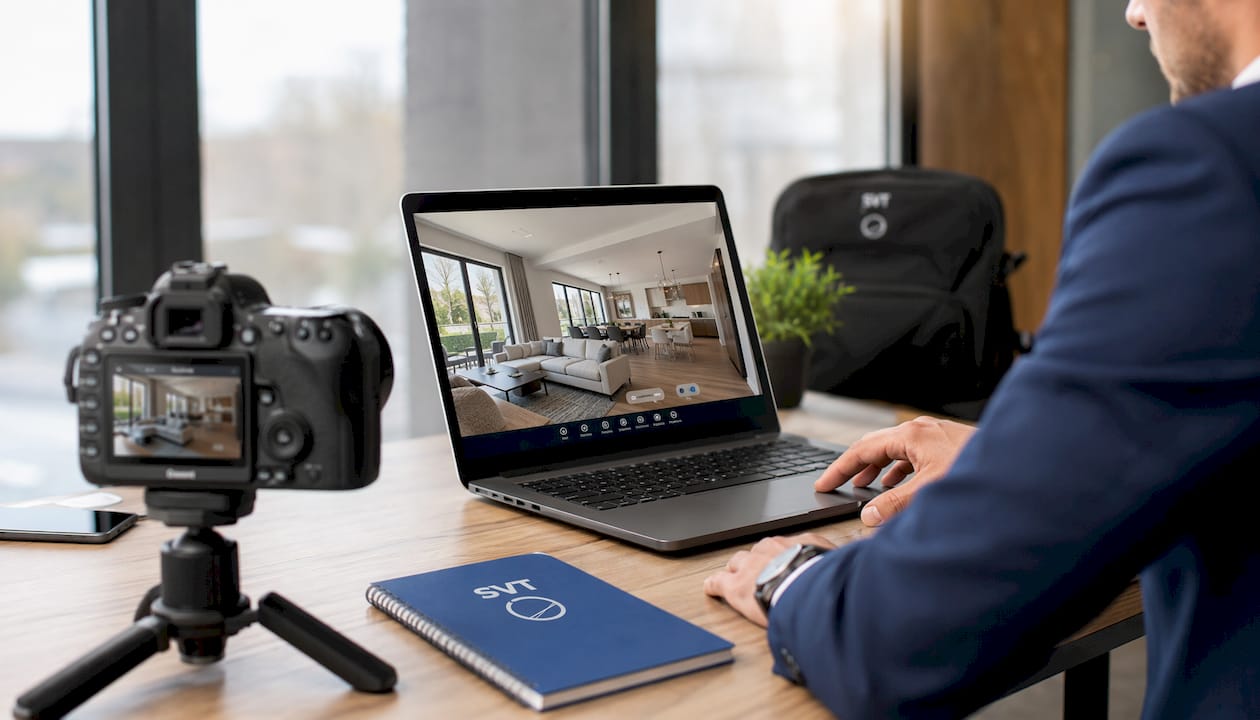
The platform supports both cloud-hosted and self-hosted deployments, which means you control your data and avoid recurring per-tour fees that add up over a full listing season. Live session capabilities let you guide a remote buyer through the property in real time, combining the interactivity of a virtual tour with the responsiveness of a live showing. The intuitive backend means you do not need a technical background to get a tour live and embedded in your MLS listing within hours of capture.
With over 1,400 current users and e-commerce integration built in, Simple Virtual Tour scales from a single agent managing a handful of listings to a brokerage running a full digital-first marketing operation. Start with Simple Virtual Tour and publish your first listing tour before your next open house weekend.
Useful sources and further reading
- Are Open Houses Worth It in 2026? (Opendoor) — comparative data on virtual vs. in-person open house conversion; use for hybrid strategy planning.
- Why 3D Rendering Is Replacing Property Visits in 2026 (Elroi IT Solutions) — conversion statistics, session duration data, and analyst framing of 3D tours as a sales channel.
- Matterport 3D Tours for Real Estate: 2026 Guide (Maven X) — platform-level data on days-on-market and qualified lead rates.
- Why 3D Walkthroughs Matter in Real Estate (Buildreins) — adoption rate data and accuracy/quality guidance.
- Are Open Houses Worth It in 2026? (iBuyer) — buyer market dynamics and when open houses underperform.
- Virtual Open Houses vs. Traditional (Propread) — side-by-side comparison of formats and hybrid strategy recommendations.
- Simple Virtual Tour: listing conversion guide — conversion-focused analysis for agents building a virtual-first workflow.
- Simple Virtual Tour: live session real estate tours — how live guided tours work and when to use them instead of pre-recorded walkthroughs.
- Simple Virtual Tour: embedded property tour guide — technical setup for MLS and website embedding.