
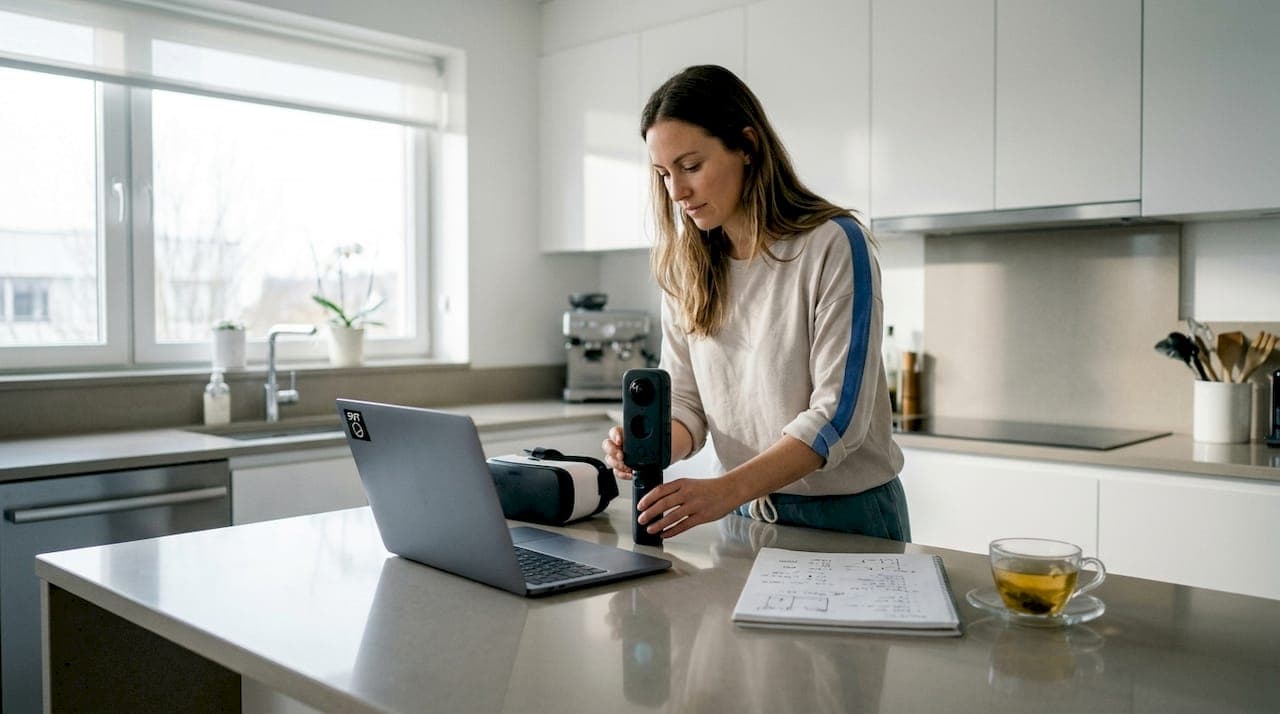
Immersive travel content is defined as any digital format that simulates physical presence in a destination, including 360-degree videos, interactive virtual tours, and extended reality (XR) experiences. Tour operators use immersive content because it closes the trust gap between a traveler's imagination and the reality of booking a trip they cannot yet touch or smell or hear. The virtual tour market is projected to reach $15.9 billion by 2034, with tourism and hospitality accounting for 38.8% of that share. That figure signals a fundamental shift: immersive formats are no longer a novelty add-on. They are becoming the primary infrastructure through which travel decisions get made.
Why tour operators use immersive content to build trust and booking intent
Immersive content works on a psychological level that static images simply cannot reach. Research on XR storytelling identifies two neurological states, self-location and copresence, that activate when a viewer feels genuinely placed inside a scene. Self-location and copresence drive deeper emotional and cognitive engagement than desktop or text-based versions of the same content. For a tour operator, that engagement translates directly into booking confidence.

The cognitive-affective-behavioral model explains the sequence clearly. A traveler first processes the immersive environment cognitively, then develops an emotional response, and finally acts on that response. Comprehension and empathy scores increase by approximately 45% with immersive XR, driving roughly a 40% increase in purchase intention compared to flat 2D ads. That is not a marginal improvement. It is the difference between a traveler who browses and one who books.
Traditional 2D photography still has a role, but it answers only one question: "What does this place look like?" Immersive content answers a harder question: "What will I feel when I am there?" The best immersive experiences succeed precisely because they address travelers' emotional questions, not just their visual curiosity. Tour operators who understand this distinction design their content around sensory storytelling rather than amenity checklists.
Pro Tip: When building a virtual tour for a high-value destination, include ambient audio alongside the 360-degree imagery. Sound activates the same presence mechanisms as visual immersion and measurably deepens emotional engagement.
What types of immersive content do tour operators use?
Tour operators draw from several distinct formats, each suited to a different stage of the traveler's decision process.
- Interactive virtual tours give travelers a self-directed walkthrough of a property, resort, or destination. They work best on booking pages, where a traveler is already considering a purchase and needs confidence to commit.
- 360-degree cinematic films place the viewer inside a curated experience, such as a sunrise hike or a cooking class. These are storytelling tools designed for social media and email campaigns, where emotional pull matters more than detail.
- Interactive destination maps layer points of interest, testimonials, and short video clips onto a geographic view. They serve travelers in the early research phase who are comparing destinations rather than specific properties.
- AI-generated cinematic footage accelerates production for social media campaigns, while authentic 360 photography anchors critical booking pages. Operators combining both create a scalable pipeline that balances emotional appeal with credibility.
The format choice should follow funnel logic. A traveler who has never heard of your destination needs cinematic storytelling. A traveler who is comparing your lodge to three others needs an interactive virtual tour with enough detail to settle the question.
| Content format | Best funnel stage | Primary goal |
|---|---|---|
| 360-degree cinematic film | Awareness | Emotional connection |
| Interactive destination map | Consideration | Destination comparison |
| Interactive virtual tour | Decision | Booking confidence |
| AI-generated social content | Awareness and retargeting | Reach and recall |
| User-generated 360 content | All stages | Authenticity and social proof |
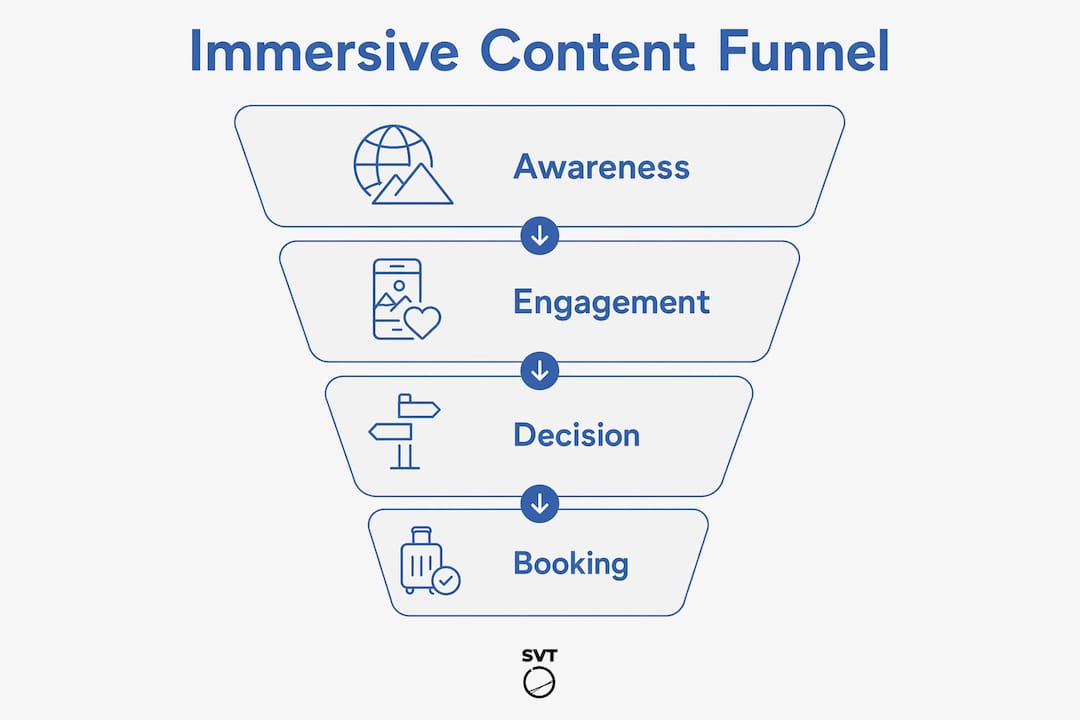
A transmedia approach links these formats into a single, coherent destination story. Connecting immersive assets across platforms, from interactive maps to testimonial videos to virtual walkthroughs, maximizes audience engagement by giving travelers multiple entry points into the same narrative. Each format reinforces the others rather than competing for attention.
Why switching from static imagery is critical in 2026
Static photography is losing its persuasive power for high-value travel purchases. Travelers researching a $5,000 safari or a $10,000 cruise expect more than a gallery of polished images. They expect to feel the experience before they pay for it.
The market data supports this shift. Short-form video holds 49% of marketing ROI preference among marketers, outpacing long-form video at 29% and live streaming at 25%. That dominance reflects a broader appetite for dynamic, experience-first content that static images cannot satisfy.
Tour operators who build immersive content pipelines now gain a compounding advantage. Consider what that means in practice:
- Operators with virtual tours on booking pages reduce customer anxiety before purchase, which shortens the sales cycle.
- Operators using 360-degree content in B2B sales presentations give trade partners a credible substitute for in-person site inspections.
- Operators publishing short-form immersive clips on social platforms capture attention in feeds dominated by video.
- Operators embedding virtual tours into booking workflows reduce deal friction for both direct consumers and wholesale partners.
The competitive gap between operators using immersive content and those relying on static imagery will widen through 2026 and beyond. The virtual tour market's 29.3% compound annual growth rate confirms that adoption is accelerating, not plateauing.
How to integrate immersive content into your marketing strategy
Immersive content delivers results only when it is embedded into the booking journey, not treated as a standalone feature. Operators embedding virtual tours into their booking hierarchy reduce deal cycle friction and customer anxiety. The content must appear where the decision is being made, not just where it looks impressive.
A practical integration follows this sequence:
- Audit your current booking journey. Identify the moments where travelers drop off or request more information. Those are the gaps that immersive content fills.
- Match format to funnel stage. Use cinematic 360 content for awareness campaigns and interactive virtual tours for decision-stage pages. Do not deploy the same asset everywhere.
- Build a B2B content layer. Trade partners, such as travel agents and wholesalers, often cannot visit your properties in person. A virtual tour for trade partners gives them the confidence to sell your product without a site inspection.
- Combine immersive content with user-generated content. Traveler-created 360 photos and short clips add authenticity that professionally produced content alone cannot replicate. Curate and republish the best examples.
- Measure and refine. Track engagement time, click-through rates from virtual tour pages, and conversion rates before and after immersive content is added. Use that data to decide where to invest next.
Experience-led content that focuses on emotional rituals, from a morning coffee ritual overlooking a valley to a guided meditation at sunset, yields higher conversion and guest satisfaction than amenity lists. This is especially true in wellness and luxury travel, where the emotional promise of the experience is the primary purchase driver.
Pro Tip: Do not build your immersive content library all at once. Start with your highest-value product, create one strong interactive virtual tour, measure its impact on conversion, and then expand. A single well-placed tour outperforms a dozen poorly integrated ones.
Key Takeaways
Immersive content is the most effective tool tour operators have for converting browsers into bookers, because it answers the emotional question "What will I feel?" before a traveler commits.
| Point | Details |
|---|---|
| Immersive content drives purchase intent | XR experiences increase purchase intention by roughly 40% compared to flat 2D ads. |
| Format must match funnel stage | Use cinematic 360 content for awareness and interactive virtual tours for decision-stage pages. |
| Static imagery is losing persuasive power | Short-form video holds 49% of marketing ROI preference, signaling demand for dynamic content. |
| Integration beats isolation | Virtual tours embedded in booking workflows reduce friction and shorten the sales cycle. |
| Emotional storytelling outperforms amenity lists | Experience-led content focused on sensory rituals drives stronger intent in luxury and wellness travel. |
What I have learned about immersive content after years in travel marketing
The operators I have watched succeed with immersive content share one habit: they think about emotion first and technology second. They do not ask "What can we show?" They ask "What do we want travelers to feel, and at what moment in their decision process?"
The biggest mistake I see is treating a virtual tour as a trophy, something to show at a trade show or embed on an "About Us" page and never touch again. That approach wastes the format's real power. A virtual tour placed on a booking confirmation page, for example, reduces post-purchase anxiety and cuts cancellation rates. That is a use case most operators have not considered.
I am also convinced that the operators who will lead in 2026 and beyond are the ones building cohesive, multi-platform narrative systems, not just producing individual pieces of content. A 360-degree film that lives only on YouTube is a missed opportunity. The same asset, embedded in an email campaign, linked from a booking page, and shared by trade partners, becomes infrastructure. The technology to build that kind of system is more accessible than most operators realize.
— Andrea
How Simple Virtual Tour helps operators build immersive content pipelines
Tour operators ready to move from static imagery to interactive experiences need a tool that makes production straightforward, not a technical project that requires outside developers.
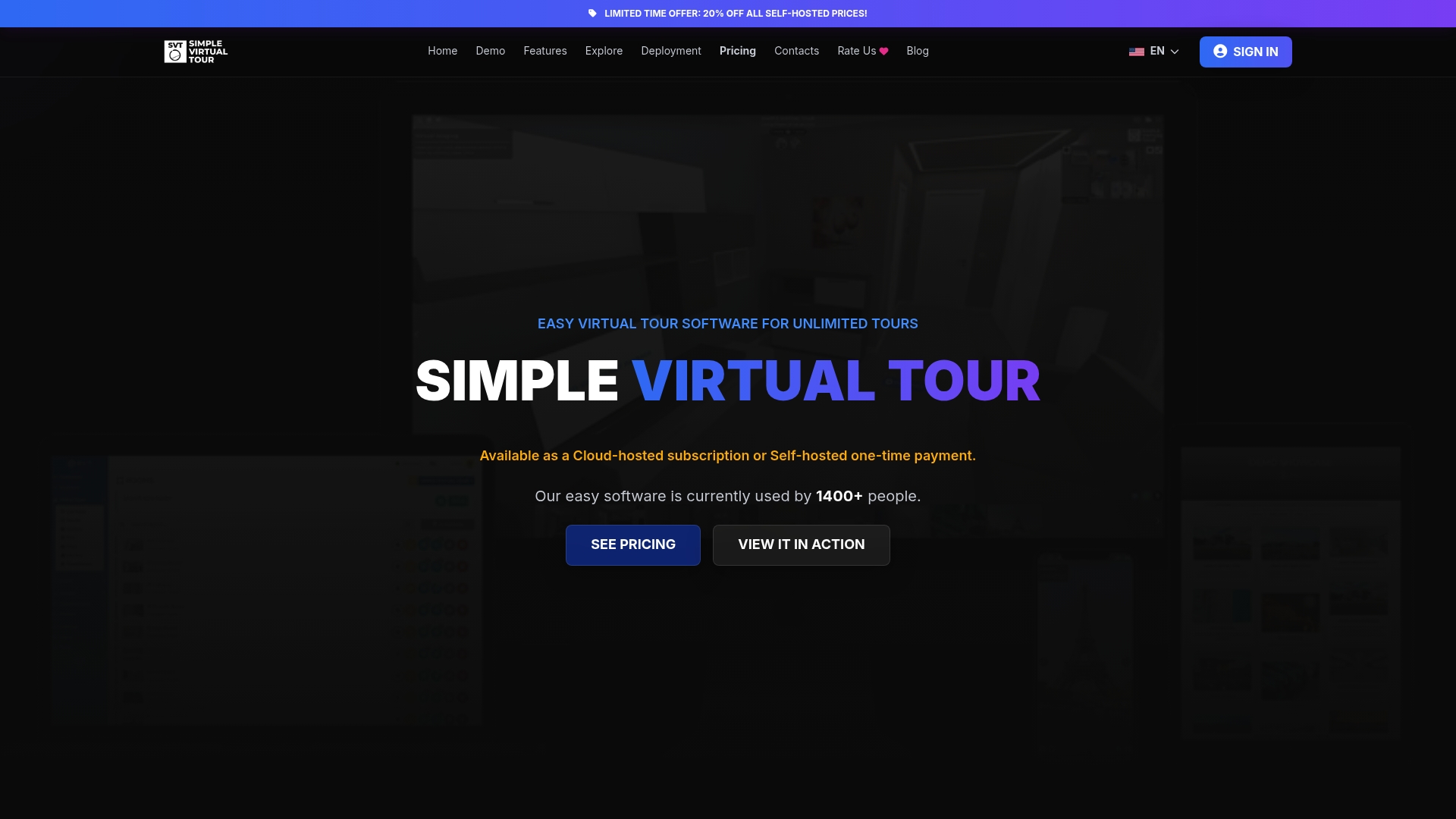
Simple Virtual Tour gives you the software to create unlimited interactive virtual tours with an intuitive backend that requires no coding knowledge. Over 1,400 users already rely on it to produce immersive content for tourism, real estate, and hospitality. The platform supports both cloud-hosted and self-hosted deployments, so you control your data and your costs. Features like live session capabilities and e-commerce integration mean your tours can do more than impress visitors. They can convert them. Start building your tours and see how quickly immersive content fits into your existing marketing workflow.
FAQ
What is immersive travel content?
Immersive travel content is any digital format that simulates physical presence in a destination, including 360-degree videos, interactive virtual tours, and XR experiences. It differs from static imagery by creating a sense of self-location and emotional engagement in the viewer.
Why do tour operators use virtual reality in marketing?
Tour operators use virtual reality because it increases purchase intention by roughly 40% compared to 2D content, according to XR research. It gives travelers the emotional confidence to book high-value experiences they cannot physically preview in advance.
How does immersive content affect booking rates?
Operators who embed virtual tours into their booking pages reduce customer anxiety and shorten the sales cycle. The format answers the traveler's emotional question about how a destination will feel, which is the primary barrier to committing to a high-value purchase.
What immersive content format works best for tour operators?
Interactive virtual tours work best at the decision stage of the booking journey, while 360-degree cinematic films perform better for awareness campaigns. The most effective strategy combines both formats across different platforms and funnel stages.
How large is the virtual tour market in tourism?
The virtual tour market is projected to reach $15.9 billion by 2034, with tourism and hospitality representing 38.8% of total applications. The sector is growing at a 29.3% compound annual growth rate, making it one of the fastest-expanding segments in travel marketing technology.